
SpaceX To Drop 70% Post IPO?
What’s better: paying $2 trillion for SpaceX, with under $20 billion in revenue, or $5 trillion for Google (GOOG), generating $400 billion in revenue and $100 billion in profits?
Yes, there are no missing zeroes or typos. Less than $20 billion in SpaceX revenue, not $200 billion. So should you fall head over heels to buy into the SpaceX IPO?
Turns out, many institutional investors are doing just that, and the enthusiasm is not irrational. SpaceX launches rockets more frequently than any company in history at costs most competitors cannot match. Starlink serves more than 10 million subscribers with recurring revenue and telecom-like margins.
So what’s the problem?
It comes down to the multiple. See Is Google a smarter bet than SpaceX
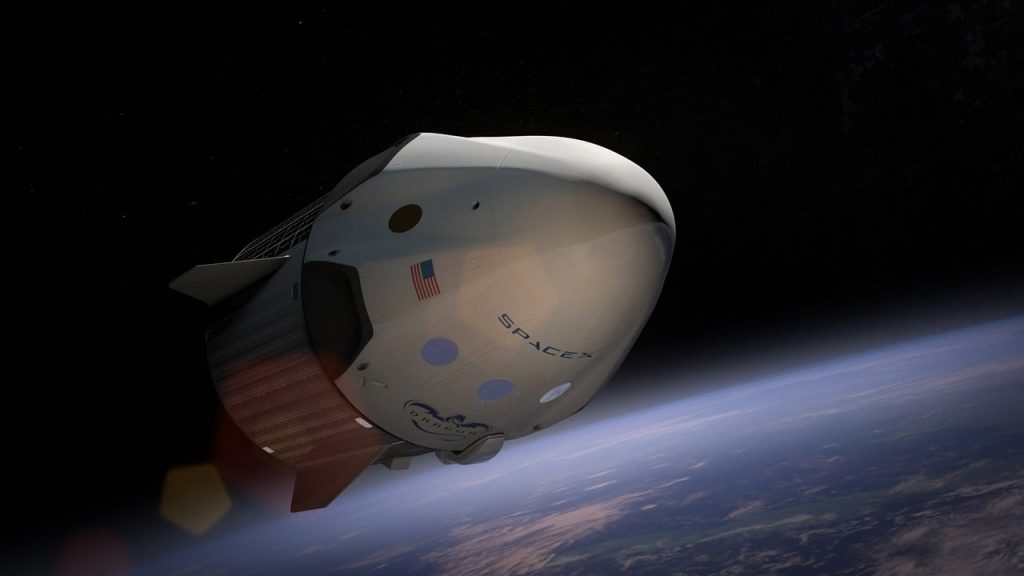
Exceptional Execution May Not Be Enough
At a 100x revenue multiple, even strong execution may not be enough. If SpaceX grows revenue 5x but its valuation compresses from 100x to 20x sales, investors could still see little or no return. Great businesses and great stocks are not always the same thing. The growth numbers make this harder to ignore. SpaceX revenue grew from $10.4 billion to $14.0 billion to $18.7 billion over the last three years, roughly 33% to 35% annually. Strong by most standards, but not the hypergrowth a 100x multiple typically demands. Amazon grew revenue 7x in 1997 and 4x in 1998 while still trading below 20x sales.
The company estimates a total addressable market of $28.5 trillion across launch, broadband, and AI infrastructure. To put that in perspective, current revenue is under $19 billion. That gap is precisely what investors are paying for. The problem is that the growth numbers do not yet show a company closing that gap at the speed the valuation requires.
That disconnect between narrative and current financial reality becomes much clearer once you look inside the economics of each individual business segment.
Starlink Is Profitable, But The Economics Could Shift
Starlink has effectively become the economic backbone of SpaceX. The satellite internet business generated roughly $11.4 billion in revenue last year, contributing over 60% of total company revenue, while posting adjusted EBITDA margins of about 63%.
But beneath those attractive margins lies a capital-intensive reality. Low Earth orbit satellites last three to five years before burning up. SpaceX spent $4.2 billion in 2025 on capital spending for this division, and this number could remain high as it needs to replace existing capacity at a steady pace in the future as well. At the same time, subscriber growth is increasingly coming from lower-income international markets. Average revenue per user has fallen from $99 in 2023 to $66 in early 2026. The combination of rising replacement costs and falling revenue per customer could alter the economics of the business.
Starship, Competition
The launch division is currently running at a net loss of $657 million. The proven, high-margin Falcon 9 revenue is being entirely consumed by capital expenditures and R&D spends required to develop Starship. If Starship suffers material delays, test failures, or regulatory setbacks, the narrative around the launch business could remain tough. The entire bull case on launch economics depends on an unproven vehicle achieving reliable commercial operations. At the same time, competition is also becoming more credible. Blue Origin successfully launched New Glenn in 2025 and recovered its booster on the following mission, giving commercial satellite operators and the Pentagon a viable heavy-lift alternative for the first time in years. The company is open to raising external capital to support a targeted ramp toward 100 launches annually, potentially narrowing what was once a near-monopoly market for SpaceX.
Massive AI Spending Without A Clear Edge
The AI division is the largest financial strain of all. Capital expenditure in that segment reached $12.7 billion in 2025 and $7.72 billion in the first quarter of 2026 alone. The division has accumulated losses of nearly $9 billion over the last fifteen months. To manage the burn rate, SpaceX is now leasing its ground-based compute to external customers, which looks less like a long-term strategic advantage and more like a near-term financing response. Unlike Google, Microsoft (MSFT), or OpenAI, SpaceX does not possess a massive enterprise software ecosystem or consumer distribution network (apart from X, formerly Twitter) capable of naturally embedding its AI products into existing workflows.
The Valuation Math Starts Breaking Down
Now, there are clearly several real risks emerging across the business. At the same time, the valuation leaves very little room for disappointment. As the hype eventually fades, investors will begin to focus less on the narrative and more on what multiple the business can realistically sustain.
Capital-intensive industrial companies typically trade at 1x to 3x sales. Even T-Mobile, one of the strongest-performing U.S. wireless carriers with recurring revenue and healthy margins, trades at under 2.5x forward revenue.
Even assuming SpaceX compounds revenue at a strong 30% annually over the next five years, revenue would still only reach roughly $70 billion by 2030. Apply a generous 9x sales multiple, and the implied valuation comes to around $630 billion, barely a third of the $2 trillion valuation currently being discussed in private markets.
As companies like SpaceX push investors toward increasingly speculative infrastructure bets, balancing them against proven cash-generating platforms becomes critical. A disciplined portfolio approach helps you stay invested by limiting the impact of market shocks. While consistently beating the market is a challenge, the Trefis High Quality (HQ) Portfolio is designed to make it an achievable goal. The HQ strategy has consistently outperformed its market benchmark since inception, delivering returns of over 105 percent.