
Nvidia Owns The AI Ecosystem. Why Does The Market Value It Like Dell?

Why is the market pricing a company with one of the strongest technology moats ever built at the same multiple as the companies that integrate its chips into servers?
Nvidia (NVDA) trades at roughly 23.5x forward earnings. So do Dell Technologies (DELL) and Hewlett Packard Enterprise (HPE), near 23x as well.
However, the growth rates and margins tell a sharply different picture. Dell is expected to grow around 50% this year. HPE closer to 20%. Nvidia is on track to grow revenue by roughly 80% this year, on top of a revenue base of approximately $215 billion. Nvidia also has net margins above 50%, ahead of the single-digit margins Dell posted during its latest quarter.
Nvidia is valued at more than $5 trillion. At that scale, an 80% growth rate is not just impressive. It is almost without precedent in the history of corporate America.
- Nvidia, The Laggard Who Won
- NVIDIA Stock And The Eight-Billion-Dollar Distraction
- Structural Risks to Watch For NVDA Stock Over the Next 6 Months
- Better Value & Growth: AVGO, NVDA Lead Monolithic Power Systems Stock
- The Smart Way to Own NVDA: Collect 10% Before You Even Buy
- Better Value & Growth: MU, NVDA Lead Broadcom Stock
The market is valuing all three identically. That is either a remarkable mispricing of the most important technology platform of this generation, or the market knows something about Nvidia’s future that the growth rate alone does not show.
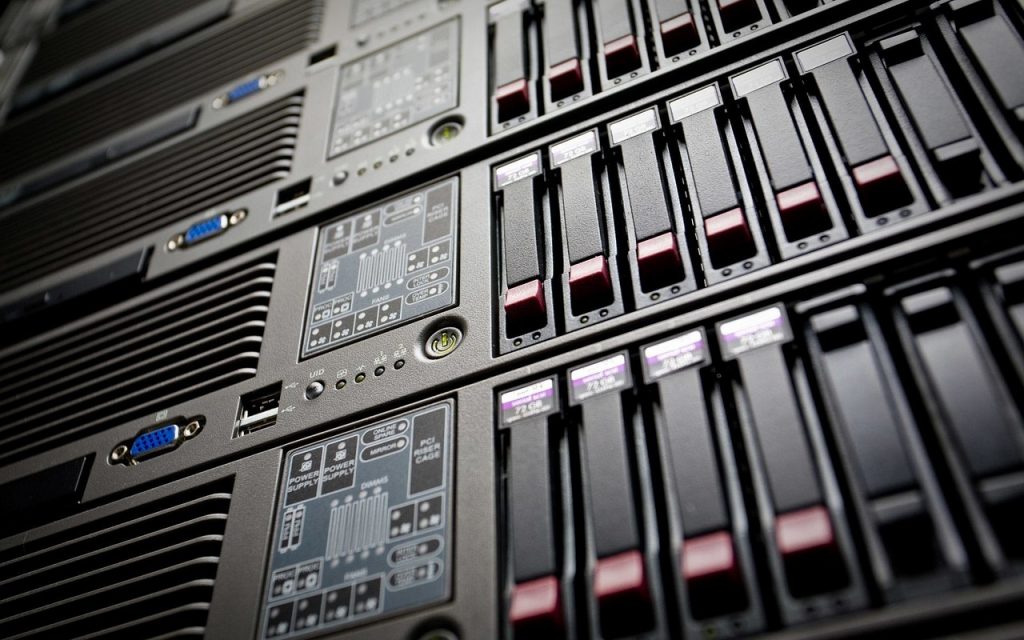
What Nvidia Actually Owns
Nvidia is not simply a chip designer. Its H100 and Blackwell GPU architectures sit at the center of nearly every major AI training workload in the world. Around those chips, Nvidia has built CUDA, a software ecosystem that took more than fifteen years to develop and that thousands of researchers, developers, and enterprises now depend on daily. Switching away from CUDA requires rewriting models, retraining teams, and accepting meaningful performance trade-offs. Nvidia also controls the Mellanox networking stack connecting GPUs inside data centers at the speeds AI demands. It sells complete AI systems, developer tools, and inference software. The moat is not just the chip, but also everything built around it.
What Dell And HPE Own
Dell and HPE are exceptional operators. They build AI servers, integrate storage and networking, manage deployments, and maintain relationships with enterprise buyers. That work is real and necessary. Both companies have developed genuine edges in areas like liquid cooling systems and data center thermal management, capabilities that matter as AI clusters grow denser and more power-hungry.
But the intellectual property inside their systems largely belongs to someone else. The GPUs come from Nvidia. Much of the networking does, too. Dell and HPE add integration, supply chain management, and services. Their gross margins, historically in the 15% to 25% range, reflect exactly that position in the value chain.
And much of that position can be replicated. The cooling expertise and deployment experience add real value, but they do not constitute a deep moat. There is no proprietary architecture, no software ecosystem built over decades, and no switching cost that locks a customer in for years.
AI has thrown up some unlikely winners. See How Corning Turned Glass Into Gold
The Valuation Anomaly
On a forward earnings basis, all three trade within a point of each other. On a growth-adjusted basis, the gap is significant. A company growing at 80% on a 23x multiple carries a price-to-earnings-to-growth ratio well below 1. Dell and HPE at similar multiples and far lower growth rates look considerably more expensive on that measure.
Nvidia’s gross margins near 75% are almost without precedent in hardware, but at this point, the market does not celebrate it. It worries about it. Google, Amazon, and Microsoft are developing custom silicon in-house. AMD is closing the performance gap with its GPUs. Open-source architectures are maturing. As enterprises look to cut AI infrastructure costs, the incentive to find alternatives grows. Defending an unprecedented margin is treated as a peak story, not a growth story.
Dell and HPE tell the opposite story. A business that could move from, say, 15% to 18% margins by layering AI services onto hardware deployments could trigger a re-rating. Markets reward margin expansion far more generously than margin preservation. They can come down heavily on margin contraction.
The Bet The Market Is Making
At a $5 trillion-plus valuation, Nvidia must sustain growth rates almost no company in history has managed at this size. Dell and HPE, worth about $360 billion combined, have far more room for multiple expansion. The market is not being irrational. It is acknowledging that compounding becomes harder the larger the base.
But if Nvidia’s moat proves more durable than the market expects, there could be substantial value at current levels. The key indicators to watch are market share, software adoption, networking growth, and customer dependence on the broader Nvidia platform. If those metrics remain intact, today’s valuation may look surprisingly modest for a company that continues to control the critical infrastructure layer of the AI economy.
If you seek an upside with less volatility than holding individual stocks like NVDA and DELL, consider the High Quality Portfolio. It has comfortably outperformed its benchmark – a combination of the S&P 500, Russell, and S&P MidCap indexes – and has achieved returns exceeding 105% since its inception.