
Why Is Everybody Paying A Premium For Kodiak Gas Services Stock?
Kodiak Gas Services (KGS) currently trades at 64.9 times its earnings of the past twelve months. That valuation sits slightly above its own three-year average of 60.8. Investors typically pay a premium multiple for growth, yet Kodiak’s revenue rose only 8.2% over those twelve months. So where do buyers expect Kodiak’s growth to come from?
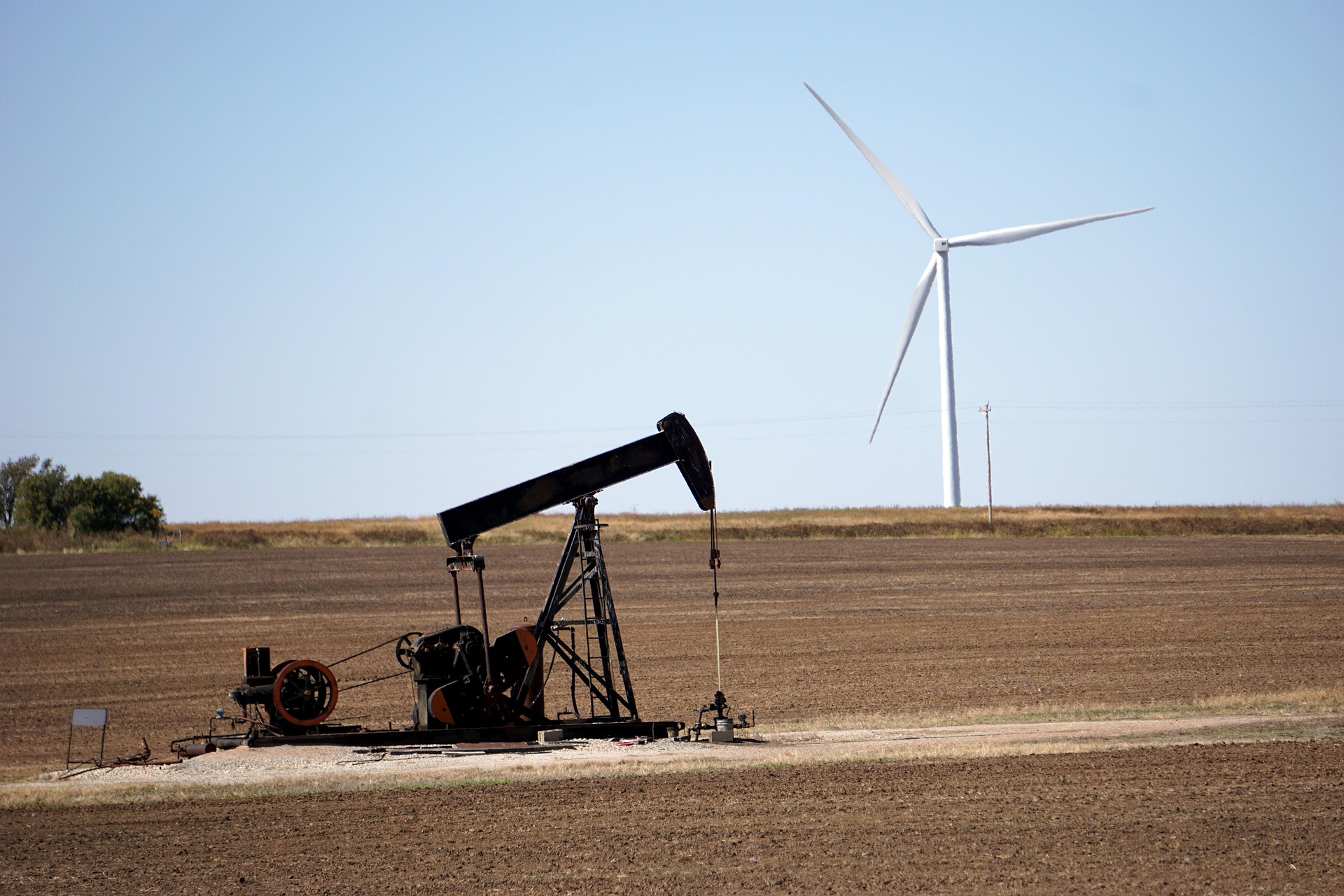
Kodiak Is Building A Power Business For Data Centers
Kodiak’s main business of compressing natural gas under contract is growing slowly. In the second quarter of fiscal 2026, revenue from compression infrastructure rose 7% from a year earlier. Kodiak is now pursuing larger ambitions in power, supplying power directly to customers located outside the grid. It ended that quarter with a power fleet of 405 megawatts, and management has set a goal to reach 2 gigawatts by the end of the decade.
During the August earnings call, management noted that data center power demand is expected to more than double over the next five years. On September 21, Kodiak announced a six-year agreement to supply 76 megawatts to a West Texas data center. Power may be what buyers are ultimately paying for, but the segment remains a small fraction of the overall business. Power brought in $33 million of Kodiak’s $391 million in second-quarter revenue.
What Kodiak Would Have To Deliver At This Price
At today’s price, Kodiak must more than double its revenue over the next six years simply for the stock to hold steady, with no return on top. This requirement rests on three of our assumptions: the P/E the stock settles at, a profit margin, and a specific time span.
Our assumed P/E is 19.8, a figure that blends two levels. We assign a 60% weight to a level of 13.0 for mature energy companies. Kodiak’s own three-year average P/E accounts for the rest. Because that average sits above 30, it counts as 30.
The market currently values Kodiak at $5.2 billion. To maintain that valuation at our assumed P/E, the company must earn significantly more than it did over the past twelve months. Our analysis uses a net margin of 7.6%. This margin is built from Kodiak’s three-year average and peak margins, moving part of the way toward a sector level of 10.0%. Operating at that margin, Kodiak would need revenue of $3.5 billion to earn the necessary profit, compared to the $1.4 billion it recorded over the past twelve months. We base this on a timeline of six years because today’s P/E is 3.3 times our assumed multiple. Hitting that revenue target within six years requires growing 16.4% a year. Analysts expect a faster route: consensus adjusted profit for 2027 is about $253 million, close to the roughly $263 million this valuation requires, and it would come from wider margins more than from revenue.
Can Kodiak’s Power Business Grow Into This Price?
Judging by management’s guidance, that growth will not arrive in 2026. The company affirmed power revenue of $95 million to $125 million for the year. This represents a fraction of the $1.25 billion to $1.28 billion it expects from compression. Management also affirmed $125 million to $160 million from other services. Any major acceleration would have to come later. Kodiak has secured about 1.8 gigawatts of generating equipment toward that 2 gigawatt goal, all of it available by the end of 2030.
Kodiak as a whole has exceeded this required pace before. Revenue growth hit 31.0% and 29.9% in the two twelve-month periods preceding the latest one, helped by acquisitions. Revenue also rose 21% in the second quarter of fiscal 2026. However, management attributed that growth primarily to its DPS acquisition, alongside increases in compression infrastructure revenue.
The growth Kodiak would need shifts most significantly based on the timeframe we allow. With four years in place of six, Kodiak would have to grow 25.6% a year, an increase of 9.2 points. Profitability also shifts the math. If the net margin stays at the 5.8% seen over the past twelve months, the required growth is 21.9% a year.
For the current stock price to hold, Kodiak has to keep signing long-term contracts for the power equipment it has ordered as that equipment arrives. If those contracts materialize slowly and growth stays near its 8.2% pace of the past twelve months, Kodiak would need more than six years to justify its valuation. At that point, the stock becomes a riskier bet.
How To Act On KGS?
Now you know KGS better. And that’s our purpose: to make you informed before you invest your money. However, making a bet on a single stock carries its own risks.
There is a smarter choice. Since its inception, the Trefis High Quality (HQ) Portfolio has beaten the benchmark that combines the three major indices – the S&P 500, S&P Mid-cap, and Russell 2000. And it did so without taking the concentrated risk that comes with do-it-yourself stock picking.
If you’d rather act on KGS itself:
| Play Offense | Play Defense |
|---|---|
| Learn More About KGS & Invest | Save Taxes On Capital Gains |
| Earn From KGS Cash Secured Puts | Covered Call Against KGS |