
Oil Markets Reprice Fear in the Gulf
Oil prices are once again on the rise. While fundamentals like supply and demand remain important, the latest surge has little to do with seasonal patterns or economic growth. Instead, it’s geopolitics—specifically, rising tensions in the Middle East—that’s rattling markets and driving up prices.
What Happened?
The global energy landscape has been jolted by Israel’s recent military strikes on Iran, targeting key nuclear facilities. This escalation has sent shockwaves through oil markets, with Brent crude prices surging up to 13%, reaching $78.50 per barrel before stabilizing around $75. Similarly, West Texas Intermediate (WTI) crude spiked over 9%, peaking at $77.62 and settling near $74. This marks the most significant single-day increase in oil prices since Russia’s 2022 invasion of Ukraine. The offensive was launched just before anticipated U.S.–Iran nuclear talks and was defended by Israel as a vital step to prevent Iran from imminently acquiring nuclear weapon capabilities.
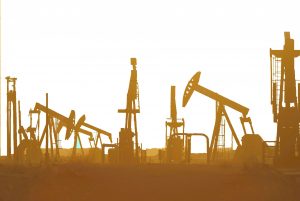 Image by AdmiralFox from Pixabay
- Halliburton’s Q3 Shows How the Oilfield Cycle Is Shifting
- S&P 500 Movers | Winners: ISRG, AVY, HAL | Losers: LII, NFLX, PWR
- S&P 500 Movers | Winners: GM, HAL, WBD | Losers: NEM, ALB, VST
- HAL Surges 11% In A Single Week, Should You Buy The Stock?
- HAL Stock Up 13% after 7-Day Win Streak
- HAL Stock Up 11% after 6-Day Win Streak
Why Is It Relevant?
At the heart of the current volatility is the Strait of Hormuz, a narrow passage connecting the Persian Gulf to the Arabian Sea. It may span just 21 miles at its narrowest point, but it carries massive strategic weight: roughly one-third of the world’s seaborne oil passes through this corridor daily. Now, this vital artery is under heightened scrutiny. While Israeli strikes have so far spared Iran’s oil infrastructure, the specter of retaliation looms large. Iran has repeatedly threatened to close the Strait—a move that would instantly disrupt global energy supply. The mere possibility of disruption is enough to send prices upward as traders brace for volatility.
Why the Timing Matters
OPEC+ Output Rises: On May 31, 2025, OPEC+ announced its third straight monthly production increase, adding 411,000 barrels per day (bpd) in July. The move, driven by Saudi Arabia’s push for market share, comes amid internal friction, notably with Russia, and follows the restoration of 1.37 million bpd of a planned 2.2 million bpd increase by end-2026. While signaling a strategic shift, the group stressed that future hikes remain conditional on market trends, with the next policy decision due July 6.
A Market in Surplus: As of May, the global oil market is already in surplus by approximately 0.5 million bpd. Meanwhile, non-OPEC producers like the U.S. and Brazil continue to ramp up output, contributing to a more robust global supply landscape than previously anticipated. This growing surplus comes as the OECD recently downgraded its global GDP growth forecast for 2025, from 3.1% to 2.9%—signaling softer demand ahead. While summer travel and a modest rebound in emerging markets are keeping demand afloat for now, any further economic weakness could tip the balance.
Demand Uncertainty: Hopes for a rebound in China’s oil demand are offset by rising trade tensions and tariffs that could slow global growth. Weaker economic activity would curb demand, while disrupted supply chains may also constrain output, creating a complex, conflicting effect on oil prices that defies easy prediction.
This convergence of rising supply, uncertain demand, and macroeconomic headwinds puts the oil market in a precarious position. On one hand, oil could spike toward $80 per barrel if Middle East tensions escalate and supply risks materialize, especially if the Strait of Hormuz is threatened. On the other hand, OPEC+ production increases and economic softness could cap gains and revive oversupply concerns heading into autumn.
Conclusion: Expect More Volatility Ahead
Oil’s recent climb is not just a function of economics—it’s a response to rising global anxiety. As long as the Strait of Hormuz remains in the geopolitical crosshairs, markets will stay on edge. Investors, consumers, and policymakers alike should prepare for continued price swings, driven less by barrels and more by bombs, borders, and brinkmanship. If history is any guide, geopolitical risk premiums can evaporate quickly—but they can also escalate in a flash.
When oil prices rise, upstream oil companies such as Halliburton (NYSE: HAL) and SLB (NYSE: SLB) typically tend to gain in such an environment. For investors seeking growth with lower volatility, the Trefis High Quality Portfolio has outperformed the S&P 500 with 91% returns since inception, providing a smoother ride through turbulence.
Invest with Trefis Market-Beating Portfolios
See all Trefis Price Estimates