
What Should American Airlines Stock Investors Be Watching Now?
American Airlines (AAL) posted record quarterly revenue for the second quarter of fiscal 2026, growing sales 16.3% from a year earlier. Yet this top-line expansion has not translated to market success. The stock has lost 25% over the three months to October 8, 2026, while the S&P 500 gained 2.8%. A single cost at American is expanding far faster than overall sales, and executives spent much of their July 2026 earnings call addressing it. So what is that cost, and how big has it become?
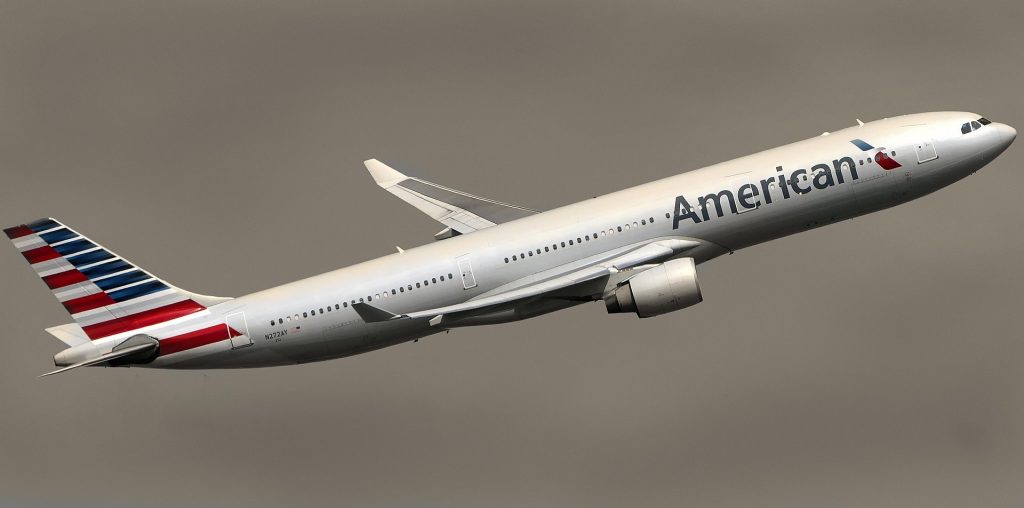
Image by Bilal EL-Daou from Pixabay
Quarterly Fuel Costs At American Airlines Rose 83%
That cost is jet fuel. American’s fuel expense jumped by more than $2.2 billion in the second quarter, representing an 83% increase from a year earlier. Stronger revenue recovered nearly half of that increase, management noted, which left more than half for American to absorb.
This rapid shift in costs has upended management’s forecast for the year. Just three weeks before the call, executives had planned to guide to full-year pretax earnings approaching $1.5 billion. Now they expect adjusted earnings to break even at the midpoint of a range running from a loss of $0.65 a share to a profit of $0.65. Over the entire year, management estimates the fuel headwind at nearly $6 billion.
Investors are also pressing the airline about its fuel exposure. On the July call, an analyst said the question he hears most from investors is why a low-margin airline like American is not cutting capacity with more urgency. American guided to third-quarter capacity growth of 3% to 5%, about 2 points below its original plan at the midpoint.
American Airlines Has One Business And Thin Margins
Because American reports a single business of flying passengers and cargo on scheduled routes, a higher fuel bill impacts all of its sales. This core business generated $54.6 billion in fiscal 2025. While those sales grew just 0.8% from fiscal 2024, sales over the latest twelve months were 7.5% higher than in the twelve months before.
The carrier operates with very little profit cushion to absorb a higher fuel bill. Its operating margin over the last twelve months stood at 1.8%, compared with 18.5% for the S&P 500. Just a year ago, American’s margin was 5.1%, and the company now shows a net loss over those twelve months.
American also carries a substantial debt load. Its debt is equal to 426.4% of its market value, against 21.0% for the S&P 500.
The stock price may already reflect some of this pressure. American shares currently sit about 30% below their 52-week high. Valued at 0.1 times sales, the stock is at the very bottom of its ten-year range, which runs up to 1.0. This price appears to assume that margins stay thin.
Can American Airlines Keep Up With Its Fuel Bill?
Not fully yet, and the financial risk is not a distant one: fuel has already cut American’s profit forecast for 2026. Nobody knows yet where fuel prices go next. Between the start of July and its July earnings call alone, the airline’s expected third-quarter fuel expense rose by more than $700 million.
American stock has historically been a difficult holding during broader market downturns. The shares fell 43% during the 2025 tariff shock, against 19% for the S&P 500. In fact, American has dropped further than the index in each of the five most recent market shocks.
There is evidence on the other side, however. Management said on the call that premium revenue grew 19% in the second quarter, outpacing the rest of its sales. Furthermore, management expects positive free cash flow for 2026 at the midpoint of its guide, alongside lower net debt by year-end.
The third quarter ended on September 30, and the upcoming report will reveal how this dynamic unfolded. Management guided to an adjusted loss of $0.70 to $0.10 a share, assuming fuel averages about $3.75 a gallon. An adjusted loss close to $0.10 a share, the better end of that range, with fuel near that price, would suggest American’s fares are recovering more of its fuel bill.
How To Act On AAL?
Now you know AAL better. And that’s our purpose: to make you informed before you invest your money. However, making a bet on a single stock carries its own risks.
There is a smarter choice. Since its inception, the Trefis High Quality (HQ) Portfolio has beaten the benchmark that combines the three major indices – the S&P 500, S&P Mid-cap, and Russell 2000. And it did so without taking the concentrated risk that comes with do-it-yourself stock picking.
If you’d rather act on AAL itself:
| Play Offense | Play Defense |
|---|---|
| Learn More About AAL & Invest | Save Taxes On Capital Gain |
| Earn From AAL Cash Secured Puts | Covered Call Against AAL |