
Why You Need To Pay Attention To Nike Stock
One business stands out at Nike (NKE): the performance business, its products for playing sports. Its sportswear business, which includes the Dunk sneaker, is where Nike has struggled. And the stock lost about 51% over the past twelve months, against about a 16% gain for the S&P 500. Nike has one growing business and a stock that has fallen far behind the market. So, how big is Nike’s performance business?
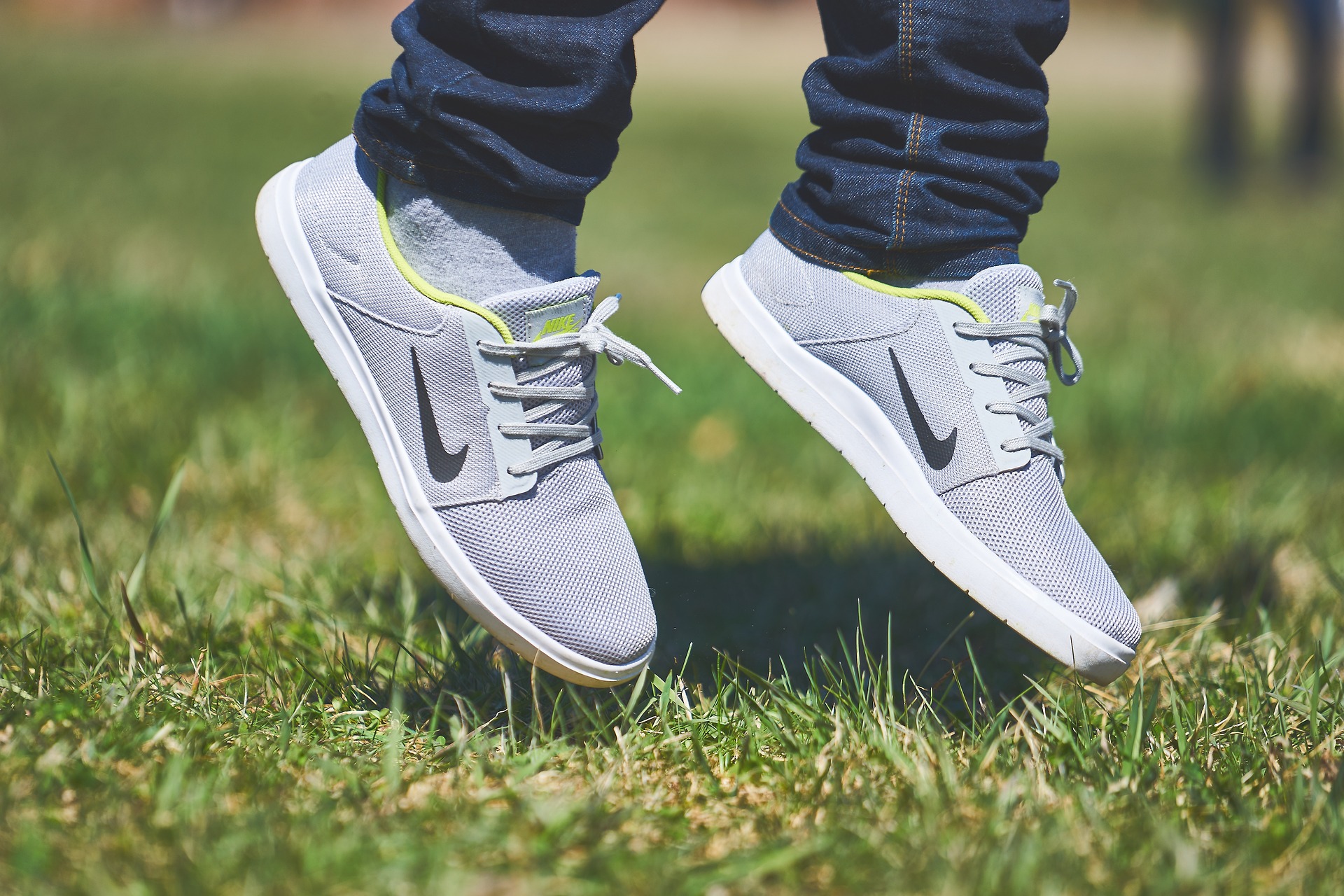
Nike Grew Its Performance Business To $16 Billion Last Fiscal Year
Nike grew its performance business to $16 billion last fiscal year, management said on the fiscal Q1 2027 call. That business sells products for sports such as running, football, tennis and golf. Management said those four drove its growth in the quarter, each growing at a double-digit rate.
The whole performance business grew by a high single-digit percentage in fiscal Q1 2027, while Nike’s total reported revenue fell 4% to $11.2 billion. So one part of Nike is growing. Management called that growth a proof point for its strategy.
Is Nike’s Performance Business Big Enough To Offset Sportswear?
Not yet, and management said so on the fiscal Q1 2027 call: the performance business is not yet large enough to offset the pressure elsewhere. Investors fear that Nike’s sales will keep shrinking, and management forecasts the same. It expects fiscal 2027 revenue to decline at a high single-digit rate. The price appears to reflect that fear: Nike trades at 16.3 times its earnings of the past twelve months, against 21.5 for the S&P 500. But on the adjusted earnings management guided for fiscal 2027, the multiple is about 25 to 30.
The pressure is in sportswear, the Jordan Brand and Greater China. Sportswear, which includes the Dunk, made up just under half of first-quarter revenue and fell by a low double-digit percentage. The Jordan Brand, 13% of the business, fell by a mid-teens percentage, and revenue in Greater China dropped 26%.
Part of that fall is Nike’s own choice. It cut revenue from the Dunk by nearly 50% in the quarter, as planned, and it is reducing supply so that more products sell at full price.
The performance business answers the fear only in part. It shows that Nike’s sports products are selling, but it cannot yet stop total sales from falling.
What Would Show Nike’s Performance Business Faltering?
Slower growth would. If the performance business grows by less than a high single-digit percentage in a later quarter, it is losing speed.
Management also expects its supply cuts to pressure reported revenue for the rest of fiscal 2027 and into fiscal 2028. It also said its actions in China, where it is overhauling its strategy to halt discounting, will further dampen sales there compared with the first quarter.
Management expects operating profit to fall by a greater percentage than revenue. It also guided fiscal 2027 adjusted earnings to $1.15 to $1.35 a share, against analyst estimates of about $1.65. That range excludes about $0.15 of impact from Pace, a program Nike expects to deliver about $2.5 billion of savings.
Nike holds its Investor Day in November, where management said it will give a clearer view of its long-term growth.
Does This Mean You Should Act On NKE?
Our purpose is to inform you with unique data so you make the right investment decisions. That said, betting on a single stock is always risky, no matter which direction you choose.
There is a smarter approach. Since its inception, the Trefis High Quality (HQ) Portfolio has returned 105%, beating the benchmark that combines the three major indices – the S&P 500, S&P Mid-cap, and Russell 2000. And it did so without taking the concentrated risk that comes with do-it-yourself stock picking. If that is how you want to invest, the HQ Portfolio is the place to start.