
HPE’s AI Orders Double With One Major Catch
When Hewlett Packard Enterprise (HPE) reported its Q2 results, (Oct. year), it delivered a report card so strong that it fundamentally reset market expectations. Driving that shift was a massive pivot in guidance: management announced it now expects to generate “at least $3.5 billion” in free cash flow this year. Those are the same milestones the company had originally targeted for the long term, now pulled forward a full two years.
Its revenue of $10.68 billion and non-GAAP earnings of $0.79 per share both blew past analyst expectations, cementing what a genuinely powerful quarter for the tech titan it was.
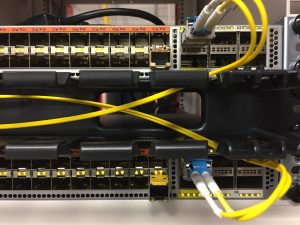
Image by Luke Robertson from Pixabay
The Engine Behind The Jump
So, what’s fueling the rocket? Overwhelming demand. The company’s order book is overflowing, with management stating that “Orders more than doubled, significantly outpacing revenue, resulting in a record company backlog.” This wasn’t an isolated strength. The core Cloud & AI segment, which includes servers, saw revenue jump to $7.7 billion. The company reported that “Traditional server orders increased triple digits” as customers scramble to modernize their data centers for AI.
- A 5-Day Winning Streak Has Hewlett Packard Enterprise Stock Up 20%
- Betting On AI Servers? Dell’s Order Book Deserves A Look
- What HPE Stock’s AI Order Book Was Saying Before The Surge
- HPE’s 42x Multiple Tells Only Half the Story
- How Hewlett Packard Built A Fortress Out Of Its Backlog
- S&P 500 Movers | Winners: LITE, HPE, FDXF | Losers: APA, PSKY, COST
This performance mirrors a broader, structural surge across the entire enterprise hardware landscape; direct hardware rivals like Dell Technologies (DELL) and Super Micro Computer (SMCI) have recently reported similarly explosive server demand, while networking and infrastructure peers like Cisco Systems (CSCO) and NetApp (NTAP) are aggressively jockeying for position as enterprises lock down their next-generation data center frameworks.
Meanwhile, HPE’s Networking division, supercharged by the Juniper acquisition, posted $2.7 billion in revenue. The demand here is just as fierce, with management noting that orders are growing “significantly faster than revenue.” On every front, customers are lining up faster than HPE can ship product.
A Ceiling Made Of Silicon
And that brings us to the fine print. That massive, record-breaking backlog is both a blessing and a curse. When one analyst on the call asked about the biggest factor limiting growth, the CEO’s answer was blunt: the main constraint is the “availability of supply.” HPE simply cannot get enough components to satisfy all the demand it’s seeing.
A closer look at that booming server business reveals the operational reality of this bottleneck. Management disclosed that server revenue growth was heavily driven by higher average selling prices (ASPs) from passing through inflationary component costs, which “more than offset supply-constrained unit volumes.” In other words, actual machine shipments were a drag on the quarter, and the stunning revenue numbers were achieved by charging more per system rather than shipping more physical boxes. Looking ahead, management doesn’t “expect the supply availability to change in 2027 that much,” suggesting this volume bottleneck isn’t going away soon.
What To Watch Now
For an investor, this reframes the entire story. The question is no longer about demand, which is clearly white-hot. The question is about conversion. The market has bought into the growth story for now, but the company’s ambitious new guidance for 8% to 12% revenue growth next year depends entirely on its ability to navigate a gridlocked supply chain.
The key, then, isn’t just the next backlog number. It’s the pace at which that backlog turns into actual sales. Watch the company’s reported revenue growth against any commentary on its order book. If that gap starts to widen, it’s a sign the supply constraints are winning the tug-of-war.
So, What Should You Do?
The Trefis High Quality (HQ) Portfolio takes the other side of that bet: 30 quality names, sized and re-balanced with discipline, and a track record of outpacing the S&P 500, S&P Mid-cap, and Russell 2000. When it comes to protecting and growing wealth over the long term, a disciplined portfolio approach historically offers lower volatility and steadier risk-adjusted returns than concentrated single stock bets.