
SpaceX’s Secret Metric
Imagine a private company pouring billions into unproven mega-rockets and moonshot ambitions suddenly being valued at over $1.75 trillion. Almost 2x what Apple was worth a decade ago. More than the GDP of most nations.
That is SpaceX today. At the $1.75 trillion valuation being touted before the coming IPO, the company trades at over 90x revenue and more than 200x trailing EBITDA.
This is not a high-margin software company with negligible capital requirements. SpaceX is a capital-intensive aerospace and hardware business with a massive industrial footprint. Growth has been solid but not explosive either, coming in at a little over 33% over the last two years. On normal valuation frameworks, the numbers do not come close to justifying the price.
So how does the valuation make sense?
- How Cheap Is ExxonMobil Stock Once You Look Two Years Out?
- How Much SanDisk (SNDK) Are You Really Betting On?
- Cisco Stock: Market Risk, Not Portfolio Diversification
- History Has An Opinion On This SNPS Price Level
- LOW Paid Holders $47 Bil While The Stock Went Nowhere
- How Wide Is The Field Of Play For Netflix Stock?
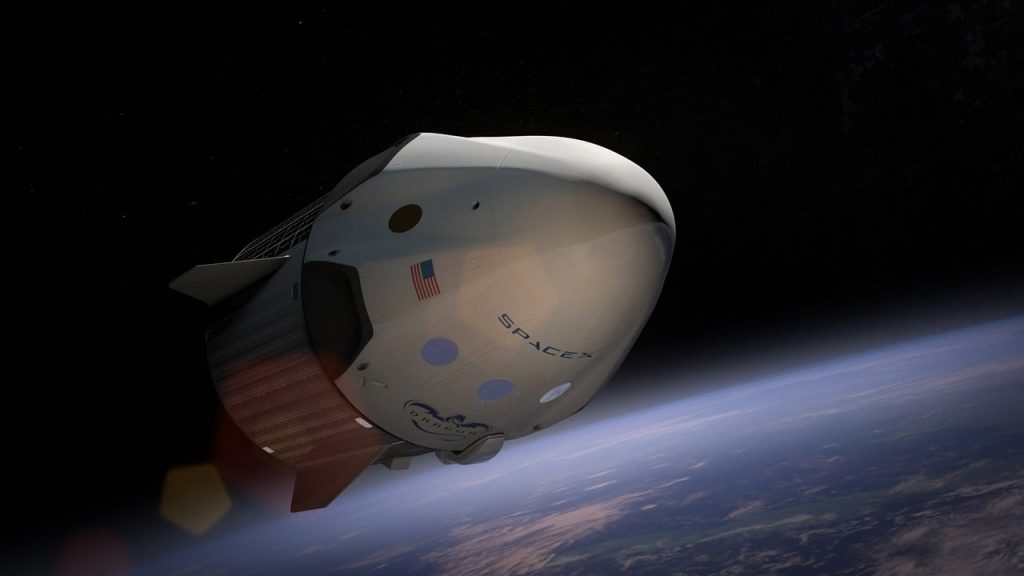
The Only Metric That Matters
The answer comes down to one metric: time horizon.
Most companies are valued on the next few years of earnings. SpaceX is being valued on the possibility of what it could become over the next two decades.
That distinction changes everything.
For more than twenty years, Elon Musk has framed SpaceX around a civilizational narrative: humanity becoming a multi-planetary species. Whether investors fully believe that vision or not, it pushes the valuation framework far beyond what markets normally apply to industrial companies.
Once investors stop focusing on 2027 or 2028 and begin underwriting 2035 or 2040 instead, conventional valuation metrics start looking less relevant.
Starlink Is Already A Massive Business
Let’s start with Starlink.
The business has grown from 2.3 million subscribers in 2023 to roughly 10 million by early 2026, with 2026 revenue potentially exceeding $20 billion as direct-to-device services expand.
At scale, Starlink begins to resemble a global telecom utility without the traditional infrastructure constraints of terrestrial networks like Verizon (VZ) and AT&T (T). No last mile. No fiber trenching. No nationwide physical build-out. If Starlink reaches 50 million subscribers globally by 2032 at an average revenue per user of $80 per month, that translates to nearly $50 billion in annual recurring connectivity revenue before accounting for government and defense contracts through Starshield.
Starship Changes the Economics of Space
Then comes the launch business and Starship.
Launch costs have already fallen from roughly $15,600 per kilogram in 2008 to under $1,000 today. Full reusability could eventually drive costs below $100 per kilogram. At those economics, entirely new industries become commercially viable. Satellite constellations, orbital manufacturing, lunar logistics, and deep-space infrastructure suddenly move from theoretical to economically plausible. And the leadership gap is substantial. Blue Origin’s New Glenn reached orbit in 2025 but still depends on partial reuse, leaving SpaceX with roughly five to seven years of compounding advantage in cadence, reusability, and accumulated flight data.
Investors are not paying 90x revenue for today’s launch business. They are paying for the optionality created by dramatically lower launch costs and a widening technological lead.
Some of those future businesses may fail entirely. Others could become massive.
Optionality Investors Are Betting On
Take each in turn.
Point-to-point Earth travel. Rocket flights between cities, London to Sydney in 45 minutes, are capable of eating into the premium long-haul aviation market.
Orbital infrastructure. Refueling depots, in-orbit assembly, and serviceable satellites are the basic plumbing that everything else built in space will depend on. Companies like Redwire (RDW) are already positioning themselves in this emerging ecosystem of space manufacturing and infrastructure. The SpaceX Halo Effect: What’s Next For Sky-High Redwire Stock?
Defense networks. Proliferated constellations of small, cheap satellites for surveillance and communications, already replacing single-platform systems in Pentagon planning.
Lunar logistics. Regular cargo runs to and from the Moon as NASA, China, and private ventures push toward permanent presence there.
New industries are built on cheap orbit access. In-space manufacturing of pharma, fiber optics, and chips, where microgravity could reduce defects and improve yields, plus space-based solar and asteroid prospecting are all uneconomic today and all unlocked the moment launch becomes cheaper.
Why should investors believe any of this is plausible?
It all comes down to track record.
Musk took Tesla from the verge of bankruptcy in 2008 to a company worth over $1 trillion while navigating repeated manufacturing crises along the way. SpaceX itself offers an even cleaner example. Reusable mega-rockets once sounded absurd, too. Three consecutive Falcon 1 failures and near-bankruptcy in 2008 eventually gave way to 300+ successful Falcon 9 landings and over 60% global launch market share. The pattern has remained remarkably consistent: long stretches where the bets look reckless or impossible, followed by category dominance once the underlying technology begins to compound.
Viewed through a 2035 lens, the math flips. Picture a company pulling in $80 billion from Starlink and global communications, another $100 billion from launch and logistics, and a growing stream from adjacent orbital businesses. Reusability widens margins, software-like leverage kicks in across the network, and SpaceX plausibly throws off $100 billion plus in annual EBITDA. Put even a modest 25 to 30x multiple on that, well below where high-quality platform businesses trade today, and you are looking at $2.5 to $3 trillion of enterprise value.
As companies like SpaceX push investors toward high-risk, high-reward bets, balancing them against proven cash-generating platforms becomes critical. A disciplined portfolio approach helps you stay invested by limiting the impact of market shocks. While consistently beating the market is a challenge, the Trefis High Quality (HQ) Portfolio is designed to make it an achievable goal. The HQ strategy has consistently outperformed its market benchmark since inception, delivering returns of over 105 percent.