
Why Is Everybody Paying A Premium For AMD Stock?
Today’s big story: Could Nvidia Stock Fall 50%? Follow The Cash
Advanced Micro Devices (AMD) stock trades at 108.3 times its earnings over the last twelve months, against 21.9 times for the S&P 500. At a price like that, buyers are paying today for profit the company has not yet earned, and they must see something that today’s earnings do not show. So which part of AMD’s business are buyers paying for?
Buyers Are Paying For AMD’s Data Center Chips
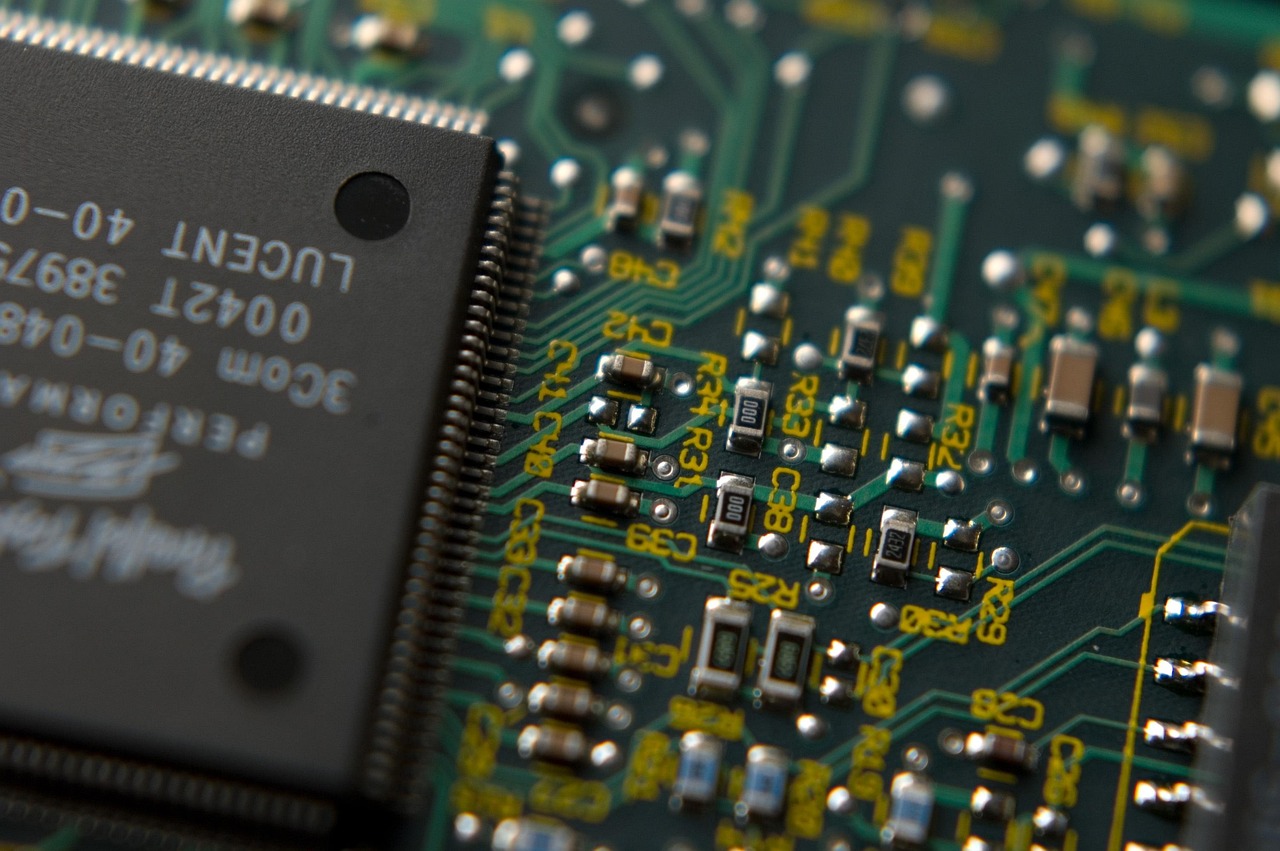
AMD’s fastest-growing business in fiscal Q3 2026 was its Data Center segment, which sells EPYC server processors and Instinct GPUs for AI work. Segment revenue rose 97% from a year earlier to a record $8.5 billion. Over the same quarter, client revenue grew 7%, while gaming revenue fell 40%.
Management expects more. On the fiscal Q3 2026 call, it said customers had expanded their EPYC and Instinct plans and that it expects server revenue to double in 2027 and data center AI revenue to grow even faster than it projected 90 days ago. It also expects data center to be more than 80% of AMD’s revenue that year, with most of its revenue and earnings growth coming from there.
For the company as a whole, revenue grew 41.9% to $45.4 billion over the four quarters ended September 26, 2026. The data center business is where that growth comes from now, and more years of it may be what buyers are paying for.
How Fast Must AMD Grow At This Price?
AMD’s shares were worth $825 billion at the November 16, 2026 close. At a mature P/E of 25.2, that value would equal $32.7 billion of yearly profit. At a steady net margin of 16.7%, that profit would take $196 billion of revenue. That margin comes from AMD’s average of 9.5% and its high of 16.8% over the last twelve quarter-ends, lifted part of the way toward a level we set for chip makers. We allow seven years, because today’s P/E is 4.3 times the mature one, with a year added for AMD’s fast growth. Our rule gives six years when today’s P/E is 3 to 5 times the mature one. At this price, AMD would have to grow revenue 23.2% a year over those seven years just for the price to hold, with no return on top.
The multiple, the margin and the seven years are our assumptions, not figures from AMD or the market. The mature P/E is a blend: a level of 22.0 that we set for semiconductor companies counts for 60% of it, and AMD’s own past for the rest. AMD’s average P/E over its last twelve quarter-ends was 138.4, so the blend caps it at 30.
Can AMD’s Business Deliver That Growth?
Management has not given a revenue figure for fiscal 2026 as a whole. Its only full-year guide is a 13% tax rate on its adjusted results. For fiscal Q4 2026, the company guided revenue of about $17 billion, plus or minus 3%, which sits roughly 66% above fiscal Q4 2025. Further out, management expects revenue to grow more than 80% in 2027. That pace is far faster than AMD would have to keep up, but it is a forecast for one year, and the requirement runs for seven.
AMD’s own record is less even. Revenue fell 3.1% in the four quarters ended September 2023. It grew 9.9% in the four quarters to September 2024 and 31.8% in the four quarters to September 2025, climbing faster still in the latest twelve months. Today’s net margin is also the highest of the last twelve quarter-ends, so AMD starts from its best margin in that span.
The seven years matter a great deal. Over five years instead, AMD would have to grow revenue 34.0% a year. The measure to watch is AMD’s data center revenue growth, due with its next report in February 2027.
For the price to hold, AMD has to keep its data center business growing fast well after 2027. If growth slips back toward its pace of two years ago, AMD would need more years, and the stock becomes a riskier bet. When this much of AMD’s price is paid for growth still years away, a holder with too much in this one stock does well to plan the exit in advance.
Too Much Riding On One Stock?
If Advanced Micro Devices is a big part of your wealth, so are its risk and its tax bill. What’s your exit plan? Our partner advisory firm offers a free 30-minute strategy review covering a floor under losses and a lower-tax way out.
Spot an error or want more like this? Tell us in 10 seconds.