
Wells Fargo (WFC)
Market Price (10/26/2026): $82.46 | Market Cap: $247.5 BilInvestor Relations Sector: Financials | Industry: Diversified Banks
Wells Fargo (WFC)
Market Price (10/26/2026): $82.46Market Cap: $247.5 BilSector: FinancialsIndustry: Diversified Banks
Investment Highlights Why It Matters Detailed financial logic regarding cash flow yields vs trend-riding momentum.
Attractive yieldTotal YieldTotal Yield = Earnings Yield + Dividend Yield, Earnings Yield = Net Income / Market Cap Dividend Yield = Total Dividends / Market Cap is 11%, Dividend Yield is 2.2%, ERPEquity Risk Premium (ERP) = Total Yield - Risk Free Rate, Reflects the premium above risk free assets offered by the investment. is 7.3%, FCF Yield is 7.6% Attractive cash flow generationCFO/Rev LTMCash Flow from Operations / Revenue (Sales), Last Twelve Months (LTM) is 22%, FCF/Rev LTMFree Cash Flow / Revenue (Sales), Last Twelve Months (LTM) is 22%, CFO LTM is 19 Bil, FCF LTM is 19 Bil Stock buyback supportStock Buyback 3Y Total is 58 Bil Low stock price volatilityVol 12M is 25% Megatrend and thematic driversMegatrends include Fintech & Digital Payments, AI in Financial Services, and Sustainable Finance. Themes include Online Banking & Lending, Show more. | Key risksWFC key risks include [1] ongoing regulatory and compliance issues stemming from its history of scandals and operational restrictions and [2] vulnerabilities within its Commercial Real Estate (CRE) portfolio. |
| Attractive yieldTotal YieldTotal Yield = Earnings Yield + Dividend Yield, Earnings Yield = Net Income / Market Cap Dividend Yield = Total Dividends / Market Cap is 11%, Dividend Yield is 2.2%, ERPEquity Risk Premium (ERP) = Total Yield - Risk Free Rate, Reflects the premium above risk free assets offered by the investment. is 7.3%, FCF Yield is 7.6% |
| Attractive cash flow generationCFO/Rev LTMCash Flow from Operations / Revenue (Sales), Last Twelve Months (LTM) is 22%, FCF/Rev LTMFree Cash Flow / Revenue (Sales), Last Twelve Months (LTM) is 22%, CFO LTM is 19 Bil, FCF LTM is 19 Bil |
| Stock buyback supportStock Buyback 3Y Total is 58 Bil |
| Low stock price volatilityVol 12M is 25% |
| Megatrend and thematic driversMegatrends include Fintech & Digital Payments, AI in Financial Services, and Sustainable Finance. Themes include Online Banking & Lending, Show more. |
| Key risksWFC key risks include [1] ongoing regulatory and compliance issues stemming from its history of scandals and operational restrictions and [2] vulnerabilities within its Commercial Real Estate (CRE) portfolio. |
Qualitative Assessment
AI Analysis | Feedback
Wells Fargo (WFC) stock has remained largely at the same level since 6/30/2026 because of the following key factors:
1. Mixed Fiscal Q3 2026 Financial Performance.
Wells Fargo reported mixed results for its fiscal Q3 2026, which ended September 30, 2026. While diluted earnings per share (EPS) of $1.87 surpassed analyst estimates ranging from $1.84 to $1.86, representing a 13% increase year-over-year, total revenue of $21.87 billion missed consensus estimates of $22.15 billion to $22.61 billion, despite a 2% year-over-year rise. Additionally, Net Interest Income (NII) of $12.52 billion fell short of the Visible Alpha consensus of $12.62 billion, even with a 5% year-over-year increase. The immediate stock reaction to these mixed results on October 13, 2026, was a slight dip, ranging from 0.96% to 1.5%.
2. Robust Underlying Business Fundamentals and Operational Efficiency.
Despite the revenue miss, Wells Fargo demonstrated strong underlying business performance in fiscal Q3 2026. Average loans and average deposits both increased by 11% year-over-year. The company's Return on Tangible Common Equity (ROTCE) improved to 16.3%, up from 15.2% in the prior year, moving closer to management's target range of 17-18%. Furthermore, noninterest expense decreased by 1% to $13.74 billion, partly due to an 8% reduction in headcount. Growth was broad-based across segments, with Wealth and Investment Management revenue notably increasing by 12%.
Show more
Wells Fargo (WFC) stock has remained largely at the same level since 6/30/2026 because of the following key factors:
1. Mixed Fiscal Q3 2026 Financial Performance.
Wells Fargo reported mixed results for its fiscal Q3 2026, which ended September 30, 2026. While diluted earnings per share (EPS) of $1.87 surpassed analyst estimates ranging from $1.84 to $1.86, representing a 13% increase year-over-year, total revenue of $21.87 billion missed consensus estimates of $22.15 billion to $22.61 billion, despite a 2% year-over-year rise. Additionally, Net Interest Income (NII) of $12.52 billion fell short of the Visible Alpha consensus of $12.62 billion, even with a 5% year-over-year increase. The immediate stock reaction to these mixed results on October 13, 2026, was a slight dip, ranging from 0.96% to 1.5%.
2. Robust Underlying Business Fundamentals and Operational Efficiency.
Despite the revenue miss, Wells Fargo demonstrated strong underlying business performance in fiscal Q3 2026. Average loans and average deposits both increased by 11% year-over-year. The company's Return on Tangible Common Equity (ROTCE) improved to 16.3%, up from 15.2% in the prior year, moving closer to management's target range of 17-18%. Furthermore, noninterest expense decreased by 1% to $13.74 billion, partly due to an 8% reduction in headcount. Growth was broad-based across segments, with Wealth and Investment Management revenue notably increasing by 12%.
3. Macroeconomic Headwinds and Cautious Sector Outlook.
While Wells Fargo's CEO, Charlie Scharf, acknowledged that strong business investment, consumer spending, AI infrastructure investment, high employment, and consistent wage growth are offsetting risks, the broader economic outlook remained cautious. The American Bankers Association's (ABA) Credit Conditions Index for fiscal Q3 2026 registered 44.7, indicating an expectation of weaker credit conditions over the next six months. This marks the seventh consecutive quarter the index has been below the neutral threshold of 50, primarily driven by a weaker outlook for business credit, despite some improvement in consumer credit conditions.
4. Shareholder Returns and Insider Activity.
Wells Fargo actively returned capital to shareholders, repurchasing 28.6 million shares totaling $2.5 billion during fiscal Q3 2026. Analyst sentiment for Wells Fargo was generally positive leading into the earnings, with Morgan Stanley upgrading the stock to a buy-equivalent rating on October 5, 2026, and Wells Fargo holding a StarMine Analyst Revisions Model (ARM) score above 70, signaling bullish sentiment among analysts. In terms of insider activity, Derek A. Flowers, Senior EVP and Chief Risk Officer, reported a "Sale (Gift)" transaction on July 15, 2026, valued at $5.95 million.
Show less
Stock Movement Drivers
Fundamental Drivers
The 0.3% change in WFC stock from 6/30/2026 to 10/24/2026 was primarily driven by a 2.4% change in the company's Total Revenues ($ Mil).| (LTM values as of) | 6302026 | 10242026 | Change |
|---|---|---|---|
| Stock Price ($) | 82.17 | 82.39 | 0.3% |
| Change Contribution By: | |||
| Total Revenues ($ Mil) | 84,743 | 86,796 | 2.4% |
| Net Income Margin (%) | 25.6% | 26.0% | 1.7% |
| P/E Multiple | 11.7 | 11.1 | -4.9% |
| Shares Outstanding (Mil) | 3,080 | 3,044 | 1.2% |
| Cumulative Contribution | 0.3% |
Market Drivers
6/30/2026 to 10/24/2026| Return | Correlation | |
|---|---|---|
| WFC | 0.3% | |
| Market (SPY) | 1.8% | 32.0% |
| Sector (XLF) | 4.3% | 68.7% |
Fundamental Drivers
The 4.7% change in WFC stock from 3/31/2026 to 10/24/2026 was primarily driven by a 4.0% change in the company's Total Revenues ($ Mil).| (LTM values as of) | 3312026 | 10242026 | Change |
|---|---|---|---|
| Stock Price ($) | 78.71 | 82.39 | 4.7% |
| Change Contribution By: | |||
| Total Revenues ($ Mil) | 83,446 | 86,796 | 4.0% |
| Net Income Margin (%) | 25.6% | 26.0% | 1.9% |
| P/E Multiple | 11.5 | 11.1 | -3.4% |
| Shares Outstanding (Mil) | 3,113 | 3,044 | 2.3% |
| Cumulative Contribution | 4.7% |
Market Drivers
3/31/2026 to 10/24/2026| Return | Correlation | |
|---|---|---|
| WFC | 4.7% | |
| Market (SPY) | 17.2% | 16.7% |
| Sector (XLF) | 13.6% | 66.0% |
Fundamental Drivers
The 0.4% change in WFC stock from 9/30/2025 to 10/24/2026 was primarily driven by a 6.5% change in the company's Total Revenues ($ Mil).| (LTM values as of) | 9302025 | 10242026 | Change |
|---|---|---|---|
| Stock Price ($) | 82.03 | 82.39 | 0.4% |
| Change Contribution By: | |||
| Total Revenues ($ Mil) | 81,462 | 86,796 | 6.5% |
| Net Income Margin (%) | 25.3% | 26.0% | 3.1% |
| P/E Multiple | 12.9 | 11.1 | -13.9% |
| Shares Outstanding (Mil) | 3,233 | 3,044 | 6.2% |
| Cumulative Contribution | 0.4% |
Market Drivers
9/30/2025 to 10/24/2026| Return | Correlation | |
|---|---|---|
| WFC | 0.4% | |
| Market (SPY) | 15.0% | 34.7% |
| Sector (XLF) | 5.0% | 70.5% |
Fundamental Drivers
The 116.9% change in WFC stock from 9/30/2023 to 10/24/2026 was primarily driven by a 31.6% change in the company's P/E Multiple.| (LTM values as of) | 9302023 | 10242026 | Change |
|---|---|---|---|
| Stock Price ($) | 37.99 | 82.39 | 116.9% |
| Change Contribution By: | |||
| Total Revenues ($ Mil) | 80,862 | 86,796 | 7.3% |
| Net Income Margin (%) | 20.6% | 26.0% | 26.3% |
| P/E Multiple | 8.4 | 11.1 | 31.6% |
| Shares Outstanding (Mil) | 3,700 | 3,044 | 21.5% |
| Cumulative Contribution | 116.9% |
Market Drivers
9/30/2023 to 10/24/2026| Return | Correlation | |
|---|---|---|
| WFC | 116.9% | |
| Market (SPY) | 83.9% | 49.3% |
| Sector (XLF) | 75.9% | 76.1% |
Price Returns Compared
| 2021 | 2022 | 2023 | 2024 | 2025 | 2026 | Total [1] | |
|---|---|---|---|---|---|---|---|
| Returns | |||||||
| WFC Return | 61% | -12% | 23% | 46% | 36% | -9% | 214% |
| Peers Return | 35% | -15% | 17% | 42% | 47% | 3% | 188% |
| S&P 500 Return | 27% | -19% | 24% | 23% | 16% | 12% | 104% |
Monthly Win Rates [3] | |||||||
| WFC Win Rate | 67% | 50% | 67% | 58% | 67% | 50% | |
| Peers Win Rate | 63% | 42% | 50% | 65% | 72% | 44% | |
| S&P 500 Win Rate | 75% | 42% | 67% | 75% | 67% | 50% | |
Max Drawdowns [4] | |||||||
| WFC Max Drawdown | -15% | -36% | -25% | -17% | -25% | -23% | |
| Peers Max Drawdown | -15% | -36% | -24% | -13% | -29% | -20% | |
| S&P 500 Max Drawdown | -5% | -25% | -10% | -8% | -19% | -9% | |
[1] Cumulative total returns since the beginning of 2021
[2] Peers: JPM, BAC, C, GS, MS. See WFC Returns vs. Peers.
[3] Win Rate = % of calendar months in which monthly returns were positive
[4] Max drawdown represents maximum peak-to-trough decline within a year
[5] 2026 data is for the year up to 10/23/2026 (YTD)
How Low Can It Go
| Event | WFC | S&P 500 |
|---|---|---|
| 2025 US Tariff Shock | ||
| % Loss | -24.1% | -18.8% |
| % Gain to Breakeven | 31.8% | 23.1% |
| Time to Breakeven | 83 days | 79 days |
| 2024 Yen Carry Trade Unwind | ||
| % Loss | -12.7% | -7.8% |
| % Gain to Breakeven | 14.6% | 8.5% |
| Time to Breakeven | 67 days | 18 days |
| Summer-Fall 2023 Five Percent Yield Shock | ||
| % Loss | -14.3% | -9.5% |
| % Gain to Breakeven | 16.7% | 10.5% |
| Time to Breakeven | 59 days | 24 days |
| 2023 SVB Regional Banking Crisis | ||
| % Loss | -24.7% | -6.7% |
| % Gain to Breakeven | 32.8% | 7.1% |
| Time to Breakeven | 264 days | 31 days |
| 2022 Inflation Shock & Fed Tightening | ||
| % Loss | -25.5% | -24.5% |
| % Gain to Breakeven | 34.2% | 32.4% |
| Time to Breakeven | 548 days | 427 days |
| 2020 COVID-19 Crash | ||
| % Loss | -46.4% | -33.7% |
| % Gain to Breakeven | 86.5% | 50.9% |
| Time to Breakeven | 402 days | 140 days |
In The Past
Wells Fargo's stock fell -24.1% during the 2025 US Tariff Shock. Such a loss loss requires a 31.8% gain to breakeven.
Preserve Wealth
Limiting losses and compounding gains is essential to preserving wealth.
Asset Allocation
Actively managed asset allocation strategies protect wealth. Learn more.
| Event | WFC | S&P 500 |
|---|---|---|
| 2025 US Tariff Shock | ||
| % Loss | -24.1% | -18.8% |
| % Gain to Breakeven | 31.8% | 23.1% |
| Time to Breakeven | 83 days | 79 days |
| 2023 SVB Regional Banking Crisis | ||
| % Loss | -24.7% | -6.7% |
| % Gain to Breakeven | 32.8% | 7.1% |
| Time to Breakeven | 264 days | 31 days |
| 2022 Inflation Shock & Fed Tightening | ||
| % Loss | -25.5% | -24.5% |
| % Gain to Breakeven | 34.2% | 32.4% |
| Time to Breakeven | 548 days | 427 days |
| 2020 COVID-19 Crash | ||
| % Loss | -46.4% | -33.7% |
| % Gain to Breakeven | 86.5% | 50.9% |
| Time to Breakeven | 402 days | 140 days |
| 2015-2016 China Devaluation / Global Growth Scare | ||
| % Loss | -20.1% | -12.2% |
| % Gain to Breakeven | 25.2% | 13.9% |
| Time to Breakeven | 299 days | 62 days |
| 2011 US Debt Ceiling Crisis & European Contagion | ||
| % Loss | -21.1% | -17.9% |
| % Gain to Breakeven | 26.8% | 21.8% |
| Time to Breakeven | 148 days | 123 days |
| 2010 Eurozone Sovereign Debt Crisis / Flash Crash | ||
| % Loss | -23.8% | -15.4% |
| % Gain to Breakeven | 31.3% | 18.2% |
| Time to Breakeven | 196 days | 125 days |
| 2008-2009 Global Financial Crisis | ||
| % Loss | -72.4% | -53.4% |
| % Gain to Breakeven | 262.8% | 114.4% |
| Time to Breakeven | 195 days | 1085 days |
In The Past
Wells Fargo's stock fell -24.1% during the 2025 US Tariff Shock. Such a loss loss requires a 31.8% gain to breakeven.
Preserve Wealth
Limiting losses and compounding gains is essential to preserving wealth.
Asset Allocation
Actively managed asset allocation strategies protect wealth. Learn more.
About Wells Fargo (WFC)
Wells Fargo & Company (WFC) is a leading diversified financial services company primarily operating in the United States and internationally. It offers a comprehensive suite of banking, investment, mortgage, and various consumer and commercial finance products and services. At its core, Wells Fargo helps individuals, businesses, and institutions manage their finances, secure loans, and pursue investment opportunities across different financial needs.
The company serves a broad customer base through distinct segments. For individual consumers and small businesses, it provides essential services like checking and savings accounts, credit and debit cards, and a wide range of lending options, including home, auto, personal, and small business loans. Commercial and corporate clients, encompassing private companies, municipalities, and large institutions, can access banking and credit products, treasury management services, capital markets solutions, and investment banking expertise. Additionally, Wells Fargo caters to affluent, high-net-worth, and ultra-high-net-worth individuals with specialized wealth management, financial planning, private banking, and trust services.
AI Analysis | Feedback
Here are a few analogies to describe Wells Fargo:
A financial superstore for individuals and businesses.
The Walmart of banking.
Like JPMorgan Chase or Bank of America, a major diversified U.S. bank.
AI Analysis | Feedback
- Checking and Savings Accounts: Provides fundamental banking services for consumers and small businesses.
- Credit and Debit Cards: Offers payment solutions for everyday transactions and credit access.
- Consumer Lending: Includes home, auto, personal, and small business loans.
- Commercial Banking Services: Provides banking and credit products for private, family-owned, and certain public companies.
- Treasury Management Services: Manages cash flow, payments, and liquidity for businesses and institutions.
- Corporate Banking: Offers financial products and services to corporate, commercial real estate, and government clients.
- Investment Banking: Provides advisory and capital raising services, including equity and fixed income solutions.
- Commercial Real Estate Lending: Specializes in lending and servicing for commercial properties.
- Wealth and Investment Management: Delivers personalized wealth management, financial planning, and brokerage services to affluent clients.
AI Analysis | Feedback
Wells Fargo (WFC) serves a diverse customer base. Given the extensive range of products and services offered to individuals across its Consumer Banking and Lending and Wealth and Investment Management segments, and the inability to name specific corporate customers as per the request's constraints, it can be concluded that the company primarily serves individuals and related entities. Therefore, its major customer categories are:
- Individual Consumers: This category includes the general public and small businesses who utilize services such as checking and savings accounts, credit and debit cards, and various lending products including home, auto, personal, and small business loans.
- Affluent, High-Net Worth, and Ultra-High-Net Worth Individuals: These clients are served by the Wealth and Investment Management segment, receiving personalized wealth management, brokerage, financial planning, private banking, lending, and trust and fiduciary services.
- Small and Medium-sized Businesses (SMBs): This category encompasses private, family-owned, and certain public companies, as well as small businesses, that rely on Wells Fargo for banking and credit products, secured lending, lease products, and treasury management services.
AI Analysis | Feedback
- Visa (V)
- Mastercard (MA)
- Equifax (EFX)
- TransUnion (TRU)
AI Analysis | Feedback
Charles W. Scharf, Chairman and Chief Executive Officer
Charles W. Scharf has served as the Chief Executive Officer of Wells Fargo & Company since October 2019 and became Chairman of the Board of Directors in October 2025. With over 30 years of experience in leadership roles within the banking and payments industries, he previously served as chief executive officer of Bank of New York Mellon from July 2017 to September 2019 and as chairman of its board. Before that, he was chief executive officer and a director of Visa Inc. from November 2012 to December 2016. Scharf's career also includes significant roles at JPMorgan Chase & Co., where he was a managing director of One Equity Partners and CEO of Retail Financial Services. He also served as CEO of the retail division of Bank One Corp. and held chief financial officer positions at Bank One Corp., Citigroup’s Global Corporate and Investment Bank division, and Salomon Smith Barney. Scharf began his career working with Jamie Dimon and Sandy Weill at Commercial Credit, progressing through various companies including Primerica, Smith Barney, Salomon Brothers, and Travelers. He is also a director of Microsoft Corporation.
Mike Santomassimo, Chief Financial Officer and Senior Executive Vice President
Mike Santomassimo is the Chief Financial Officer (CFO) and Senior Executive Vice President of Wells Fargo, a position he assumed in Fall 2020, following an announcement in July 2020. He is responsible for the company's financial management functions, including accounting and control, financial planning and analysis, treasury, and investor relations. Santomassimo is a 30-year veteran of banking, having previously served as CFO at BNY Mellon since 2018. Prior to joining BNY Mellon, he spent 11 years at JPMorgan Chase in various key finance leadership roles. His roles at JPMorgan Chase included CFO for Banking, overseeing investment banking and treasury services, and CFO of the securities services & U.S. private banking businesses. Santomassimo began his career at Smith Barney, where he held various roles, including co-head of the Strategy and Finance team for the brokerage division.
Derek A. Flowers, Senior EVP, Head of Risk
Derek A. Flowers serves as the Senior Executive Vice President and Head of Risk at Wells Fargo.
Scott E. Powell, Senior EVP, Chief Operating Officer
Scott E. Powell holds the position of Senior Executive Vice President and Chief Operating Officer at Wells Fargo.
Barry Sommers, Senior EVP, CEO of Wealth & Investment Management
Barry Sommers is the Senior Executive Vice President and CEO of Wealth & Investment Management at Wells Fargo. He joined Wells Fargo in June 2020, having previously worked at JP Morgan Chase.
AI Analysis | Feedback
The public company Wells Fargo (WFC) faces several key risks, primarily stemming from its extensive history of regulatory and compliance issues, the lasting impact on its reputation, and the inherent volatility associated with interest rate changes.
-
Regulatory and Compliance Risks: Wells Fargo has been subject to significant regulatory scrutiny and numerous enforcement actions due to widespread misconduct, including the infamous "fake accounts" scandal where employees created millions of unauthorized customer accounts. This history has resulted in billions of dollars in fines and settlements from various regulatory bodies such as the Federal Reserve, the Consumer Financial Protection Bureau (CFPB), and the Office of the Comptroller of the Currency (OCC). While the Federal Reserve recently terminated its 2018 enforcement action and lifted the asset cap, the bank continues to face outstanding consent orders, particularly from the OCC, related to deficiencies in anti-money laundering controls and financial crime risk management. The ongoing need for substantial investment in compliance infrastructure, governance reform, and internal risk management remains a significant operational and financial burden.
-
Reputational Risk: Directly linked to its past misconduct and regulatory challenges, Wells Fargo has endured significant damage to its brand and public trust. The various scandals have eroded customer confidence, making the rebuilding and maintenance of trust a critical, ongoing challenge for the company. This tarnished reputation can impact customer acquisition, retention, and overall market standing in a competitive financial services landscape.
-
Net Interest Income (NII) Volatility and Interest Rate Risk: As a diversified financial services company, Wells Fargo's profitability is significantly exposed to fluctuations in interest rates. The company recently trimmed its 2025 Net Interest Income (NII) guidance, attributing the revision to rising deposit costs and lower NII in its Markets business. Lower asset yields, influenced by Federal Reserve rate decisions, have also negatively impacted NII, despite efforts to manage deposit costs. Managing this inherent interest rate risk through strategies like hedging is crucial for the bank's financial performance.
AI Analysis | Feedback
- The rise of **Fintech companies**, including neobanks and specialized digital lenders, offering more agile, digital-first, and often lower-cost alternatives across banking, lending, and payment services. These companies are attracting customers with superior digital experiences and tailored financial products, directly impacting Wells Fargo's traditional consumer banking, small business lending, and payment processing.
- The increasing entry of **Big Tech companies** (e.g., Apple, Google, Amazon) into financial services, leveraging their vast customer bases, extensive data, and technological prowess to offer credit cards, payment solutions, and lending products. This poses a significant competitive threat in consumer banking, payments, and small business lending segments.
- The expansion of **robo-advisors and low-cost digital investment platforms** that provide automated, cost-effective wealth management and investment advice. These platforms directly challenge Wells Fargo's traditional wealth and investment management services, particularly for mass affluent and younger clients seeking accessible financial planning and brokerage options.
AI Analysis | Feedback
- Consumer Banking and Lending:
- Retail Banking: The U.S. retail banking market size stands at approximately USD 0.87 trillion in 2025 and is projected to reach USD 1.08 trillion by 2030.
- Credit and Debit Cards: The U.S. credit card market size was approximately USD 190 billion in 2024.
- Home Lending (Mortgage Market): The total U.S. mortgage market is approximately USD 14.5 trillion.
- Auto Lending: The U.S. auto loan market size is projected to be USD 676.20 billion in 2025.
- Small Business Lending: The U.S. small business loan market was valued at approximately USD 245.39 billion in 2023 and is projected to reach USD 349.64 billion by 2033.
- Commercial Banking:
- Commercial Banking: The U.S. commercial banking market size stands at approximately USD 732.5 billion in 2025 and is forecasted to reach USD 915.45 billion by 2030.
- Corporate and Investment Banking:
- Investment Banking: The global investment banking market size was valued at approximately USD 111.0 billion in 2024 and is poised to grow to USD 221.89 billion by 2033. North America's investment banking market was valued at USD 44.72 billion in 2025.
- Commercial Real Estate Lending: The U.S. commercial real estate (CRE) mortgage market consists of approximately USD 4.5 trillion backed by income-producing properties.
- Wealth and Investment Management:
- Wealth and Asset Management: The United States Asset Management Market was valued at approximately USD 52.08 trillion in 2024 and is expected to reach USD 134.67 trillion by 2030.
AI Analysis | Feedback
Wells Fargo & Company (WFC) anticipates several key drivers for future revenue growth over the next two to three years, stemming from strategic investments, an evolving interest rate environment, and the easing of regulatory constraints.
One significant driver is the **growth in Net Interest Income (NII)**. Wells Fargo projects its NII to be approximately $50 billion in 2026, with contributions from both Markets NII and NII excluding Markets. This growth is expected to be supported by anticipated mid-single-digit growth in average loans and deposits from Q4 2025 to Q4 2026. While sensitive to interest rate fluctuations, the company's actions are aimed at driving stronger returns over the economic cycle.
A second driver involves the **expansion and diversification of fee-based revenue**. Wells Fargo is strategically investing in areas such as credit cards, investment banking, and trading, with early signs pointing to increased market share and fee growth. Non-interest income saw a 5% year-over-year increase in 2025, driven by strong performance in investment banking (up 11% in 2025) and markets revenue (up 7% in 2025). Fees from providing investment banking and markets capabilities to Commercial Banking clients also experienced over 25% growth in 2025. The Wealth and Investment Management segment notably reported a 10% year-over-year revenue increase in Q4 2025, fueled by fees and net income, with plans for further investment in the independent broker/dealer channel and RIA solutions in 2026.
Thirdly, **customer and balance growth across key business segments** is expected to contribute to revenue expansion. In Consumer Banking, the company observed stronger growth in net checking accounts and opened nearly 3 million new credit card accounts in 2025, marking a 21% increase from the prior year. Credit card balances also grew by 6% in 2025, and the auto business returned to growth with a 19% increase in loan balances. In Commercial Banking, Wells Fargo has expanded its team by hiring 185 coverage bankers over the last two years, enhancing its ability to serve clients. Efforts to refurbish 700 branches in 2025 are also aimed at improving customer experience and driving engagement.
Finally, the **easing of regulatory constraints** is anticipated to facilitate broader growth. The removal of the asset cap by the Federal Reserve and the termination of multiple consent orders are expected to enable stronger growth in Wells Fargo's consumer and commercial businesses, allowing the company to pursue opportunities more aggressively.
AI Analysis | Feedback
1. Share Repurchases
- Wells Fargo's board authorized a new common stock repurchase program of up to $30 billion in July 2023.
- In April 2025, the board authorized a new common stock repurchase program of up to $40 billion, set to commence upon the completion of the existing program.
- The company repurchased approximately $20 billion of common stock in 2024, an increase of 64% from the prior year, contributing to a total of $25 billion returned to shareholders in 2024. In 2025, $18 billion in common stock was repurchased.
2. Share Issuance
- Wells Fargo's shares outstanding have consistently declined over the past few years due to repurchases, with a 6.5% decline in 2025 from 2024 (to 3.242 billion shares) and a 6.79% decline in 2024 from 2023 (to 3.468 billion shares).
4. Outbound Investments
- The company has been making investments to drive organic growth and enhance the earnings capacity across its various businesses.
- Wells Fargo has been investing in its wholesale businesses and has shown strong performance from its venture capital investments.
- Management plans to invest in improving its existing businesses, including increasing its share in the middle-market investment banking market, allocating more resources to credit card services, and revitalizing its wealth management division.
5. Capital Expenditures
- Wells Fargo did not report meaningful capital expenditures for the latest twelve months ending December 31, 2025.
- The company's cash flow for capital expenditures for the three months ending September 2025 and for the trailing twelve months ending September 2025 was $0 million.

Peer Outperformance in Diversified Banks
| Industry | Names | 1Y med | 3Y med | 5Y med | Top 3 by 5Y |
|---|---|---|---|---|---|
| Reinsurance | 6 | 28.7% | 75.2% | 121.5% | SPNT 173% · RNR 148% · RGA 146% |
| Diversified Banks ← | 12 | 26.4% | 152.5% | 88.0% | CM 137% · RY 123% · JPM 119% |
| Life & Health Insurance | 20 | 14.7% | 55.4% | 74.1% | JXN 472% · UNM 277% · MFC 176% |
| Investment Banking & Brokerage | 13 | -14.4% | 108.1% | 71.9% | IBKR 343% · SNEX 168% · HOOD 140% |
| Property & Casualty Insurance | 42 | 15.1% | 71.3% | 66.7% | TRV 170% · PGR 166% · ACGL 147% |
| Multi-line Insurance | 9 | 6.3% | 66.1% | 57.5% | GNW 99% · L 98% · AIZ 87% |
| Multi-Sector Holdings | 3 | 4.0% | 57.0% | 52.5% | BRK-B 87% · VOYA 52% · JEF 28% |
| Regional Banks | 264 | 30.2% | 104.2% | 51.1% | CBC 241% · FCNCA 186% · NIC 148% |
| Financial Exchanges & Data | 15 | 13.8% | 39.1% | 32.1% | CBOE 181% · VIRT 152% · CME 73% |
| Insurance Brokers | 15 | -3.4% | 10.1% | 22.9% | LIFE 405% · ARX 88% · AJG 71% |
| Consumer Finance | 30 | 0.0% | 79.9% | 14.7% | ENVA 374% · FCFS 102% · AGM 92% |
| Diversified Financial Services | 4 | -9.1% | 23.5% | 3.5% | FRHC 160% · EQH 77% |
| Asset Management & Custody Banks | 85 | -12.8% | 19.9% | 2.8% | WT 283% · AAMI 246% · VCTR 241% |
| Commercial & Residential Mortgage Finance | 14 | -57.9% | 26.5% | -8.5% | FNMA 386% · FMCC 347% · ACT 161% |
| Specialized Finance | 3 | 7.6% | 44.9% | -12.4% | CACC -12% · HASI -22% |
| Mortgage REITs | 34 | -20.1% | 0.7% | -32.8% | RITM 36% · DX 20% · AGNC 8% |
| Transaction & Payment Processing Services | 17 | 5.3% | 12.0% | -34.1% | V 83% · MA 79% · CPAY 47% |
| Diversified Capital Markets | 20 | -55.6% | 2.1% | -66.5% | LPLA 85% · TW 46% · RIOT -56% |
Latest Trefis Analyses
Research & Analysis
Invest in Strategies
Wealth Management
Peer Comparisons
| Peers to compare with: |
Financials
| Median | |
|---|---|
| Name | |
| Mkt Price | 150.39 |
| Mkt Cap | 271.8 |
| Rev LTM | 88,994 |
| Op Inc LTM | - |
| FCF LTM | -21,546 |
| FCF 3Y Avg | -31,954 |
| CFO LTM | -16,942 |
| CFO 3Y Avg | -27,084 |
Growth & Margins
| Median | |
|---|---|
| Name | |
| Rev Chg LTM | 10.5% |
| Rev Chg 3Y Avg | 8.7% |
| Rev Chg Q | 16.4% |
| QoQ Delta Rev Chg LTM | 3.9% |
| Op Inc Chg LTM | - |
| Op Inc Chg 3Y Avg | - |
| Op Mgn LTM | - |
| Op Mgn 3Y Avg | - |
| QoQ Delta Op Mgn LTM | - |
| CFO/Rev LTM | -20.7% |
| CFO/Rev 3Y Avg | -35.0% |
| FCF/Rev LTM | -26.2% |
| FCF/Rev 3Y Avg | -41.5% |
Segment Financials
Revenue by Segment| $ Mil | 2025 | 2024 | 2023 | 2022 | 2021 |
|---|---|---|---|---|---|
| Consumer Banking and Lending | 37,362 | 36,201 | 37,919 | 35,810 | 34,877 |
| Corporate and Investment Banking | 19,232 | 19,344 | 19,191 | 15,242 | 13,839 |
| Wealth and Investment Management | 16,328 | 15,436 | 14,691 | 14,822 | 14,346 |
| Commercial Banking | 11,978 | 12,778 | 13,449 | 10,920 | 8,549 |
| Corporate | 747 | 338 | -457 | -415 | 9,169 |
| Reconciling Items | -1,948 | -1,801 | -2,196 | -2,011 | -1,614 |
| Total | 83,699 | 82,296 | 82,597 | 74,368 | 79,166 |
| $ Mil | 2015 | 2014 | 2013 | 2012 | 2011 |
|---|---|---|---|---|---|
| Community Banking | 19,933 | 21,055 | 18,861 | 15,730 | 13,469 |
| Wholesale Banking | 11,761 | 10,773 | 12,131 | 11,724 | 10,581 |
| Wealth and Investment Management | 3,735 | ||||
| Other | -1,788 | -1,274 | -1,127 | -1,125 | -2,477 |
| Wealth, Brokerage and Retirement | 3,361 | 2,764 | 2,142 | 2,083 | |
| Total | 33,641 | 33,915 | 32,629 | 28,471 | 23,656 |
| $ Mil | 2025 | 2024 | 2023 | 2022 | 2021 |
|---|---|---|---|---|---|
| Consumer Banking and Lending | 7,865 | 7,009 | 7,939 | 5,441 | 8,555 |
| Corporate and Investment Banking | 7,283 | 7,338 | 6,426 | 5,878 | 6,062 |
| Commercial Banking | 4,184 | 4,689 | 5,104 | 4,018 | 3,134 |
| Wealth and Investment Management | 2,119 | 1,902 | 1,964 | 2,422 | 2,027 |
| Reconciling Items | 0 | 0 | 0 | 0 | 0 |
| Corporate | -113 | -1,216 | -2,291 | -4,082 | 2,331 |
| Total | 21,338 | 19,722 | 19,142 | 13,677 | 22,109 |
| $ Mil | 2025 | 2024 | 2023 | 2022 | 2021 |
|---|---|---|---|---|---|
| Corporate and Investment Banking | 787,751 | 597,278 | 547,203 | 550,177 | 546,549 |
| Corporate | 638,664 | 633,799 | 674,075 | 601,214 | 721,335 |
| Consumer Banking and Lending | 373,494 | 361,663 | 375,484 | 387,710 | 378,620 |
| Commercial Banking | 252,001 | 246,569 | 245,568 | 250,198 | 210,810 |
| Wealth and Investment Management | 96,721 | 90,536 | 90,138 | 91,717 | 90,754 |
| Reconciling Items | 0 | 0 | 0 | ||
| Total | 2,148,631 | 1,929,845 | 1,932,468 | 1,881,016 | 1,948,068 |
Price Behavior
| Market Price | $82.39 | |
| Market Cap ($ Bil) | 250.8 | |
| First Trading Date | 06/01/1972 | |
| Distance from 52W High | -13.1% | |
| 50 Days | 200 Days | |
| DMA Price | $84.65 | $83.26 |
| DMA Trend | down | down |
| Distance from DMA | -2.7% | -1.0% |
| 3M | 1YR | |
| Volatility | 23.8% | 25.5% |
| Downside Capture | 105.28 | 93.64 |
| Upside Capture | 68.22 | 79.66 |
| Correlation (S&P 500) | 32.9% | 34.6% |
| 1M | 2M | 3M | 6M | 1Y | 3Y | |
|---|---|---|---|---|---|---|
| Beta | 0.78 | 0.72 | 0.91 | 0.39 | 0.75 | 0.92 |
| Up Beta | -1.72 | 0.19 | 0.55 | 0.17 | 0.51 | 0.81 |
| Down Beta | -0.39 | 1.28 | 1.22 | 0.37 | 0.73 | 1.08 |
| Up Capture | 83% | 54% | 86% | 35% | 67% | 86% |
| Bmk +ve Days | 6 | 16 | 27 | 66 | 132 | 424 |
| Stock +ve Days | 9 | 21 | 33 | 69 | 136 | 402 |
| Down Capture | 190% | 136% | 113% | 61% | 97% | 96% |
| Bmk -ve Days | 16 | 26 | 37 | 60 | 120 | 328 |
| Stock -ve Days | 13 | 21 | 31 | 57 | 116 | 347 |
[1] Upside and downside betas calculated using positive and negative benchmark daily returns respectively
Based On 1-Year Data
| Annualized Return | Annualized Volatility | Sharpe Ratio | Correlation with WFC | |
|---|---|---|---|---|
| WFC | 0.4% | 25.5% | -0.03 | - |
| Sector ETF (XLF) | 8.0% | 14.5% | 0.29 | 70.8% |
| Equity (SPY) | 14.8% | 12.7% | 0.80 | 34.8% |
| Gold (GLD) | -2.8% | 28.5% | -0.11 | 9.3% |
| Commodities (DBC) | 52.1% | 20.7% | 1.91 | -12.0% |
| Real Estate (VNQ) | 4.3% | 13.9% | 0.06 | 28.9% |
| Bitcoin (BTCUSD) | -24.8% | 43.5% | -0.54 | 14.7% |
Smart multi-asset allocation framework can stack odds in your favor. Learn How
Based On 5-Year Data
| Annualized Return | Annualized Volatility | Sharpe Ratio | Correlation with WFC | |
|---|---|---|---|---|
| WFC | 14.0% | 29.5% | 0.46 | - |
| Sector ETF (XLF) | 9.0% | 18.3% | 0.35 | 80.2% |
| Equity (SPY) | 12.7% | 17.1% | 0.56 | 56.0% |
| Gold (GLD) | 17.3% | 18.9% | 0.73 | 1.0% |
| Commodities (DBC) | 9.5% | 19.5% | 0.37 | 9.5% |
| Real Estate (VNQ) | 1.1% | 18.9% | -0.05 | 41.9% |
| Bitcoin (BTCUSD) | 5.7% | 51.7% | 0.29 | 23.3% |
Smart multi-asset allocation framework can stack odds in your favor. Learn How
Based On 10-Year Data
| Annualized Return | Annualized Volatility | Sharpe Ratio | Correlation with WFC | |
|---|---|---|---|---|
| WFC | 9.3% | 32.4% | 0.35 | - |
| Sector ETF (XLF) | 13.2% | 22.1% | 0.54 | 84.4% |
| Equity (SPY) | 15.3% | 17.9% | 0.72 | 62.5% |
| Gold (GLD) | 11.8% | 16.4% | 0.59 | -2.8% |
| Commodities (DBC) | 8.4% | 18.1% | 0.38 | 21.1% |
| Real Estate (VNQ) | 5.2% | 20.7% | 0.21 | 50.8% |
| Bitcoin (BTCUSD) | 62.4% | 66.2% | 1.02 | 18.1% |
Smart multi-asset allocation framework can stack odds in your favor. Learn How
Returns Analyses
Earnings Returns History
Updated 10/22/2026| Forward Returns | |||
|---|---|---|---|
| Earnings Date | 1D Returns | 5D Returns | 21D Returns |
| 10/13/2026 | -3.1% | -1.8% | |
| 7/14/2026 | -2.7% | -1.5% | 0.3% |
| 4/14/2026 | -5.7% | -5.4% | -12.7% |
| 1/14/2026 | -0.3% | -1.4% | -2.1% |
| 10/14/2025 | 7.1% | 9.0% | 9.8% |
| 7/15/2025 | -5.5% | -3.8% | -4.2% |
| 4/11/2025 | -1.0% | 2.5% | 19.3% |
| 1/15/2025 | 0.0% | 1.9% | 5.8% |
| ... | |||
| SUMMARY STATS | |||
| # Positive | 9 | 16 | 17 |
| # Negative | 16 | 9 | 7 |
| Median Positive | 4.0% | 3.7% | 10.3% |
| Median Negative | -2.0% | -1.8% | -4.7% |
| Max Positive | 7.1% | 11.7% | 22.0% |
| Max Negative | -6.0% | -8.2% | -12.7% |
| Forward Returns | |||
|---|---|---|---|
| Earnings Date | 1D Returns | 5D Returns | 21D Returns |
| 10/13/2026 | -3.1% | -1.8% | |
| 7/14/2026 | -2.7% | -1.5% | 0.3% |
| 4/14/2026 | -5.7% | -5.4% | -12.7% |
| 1/14/2026 | -0.3% | -1.4% | -2.1% |
| 10/14/2025 | 7.1% | 9.0% | 9.8% |
| 7/15/2025 | -5.5% | -3.8% | -4.2% |
| 4/11/2025 | -1.0% | 2.5% | 19.3% |
| 1/15/2025 | 0.0% | 1.9% | 5.8% |
| 10/11/2024 | 5.6% | 11.5% | 22.0% |
| 7/12/2024 | -6.0% | -1.5% | -11.6% |
| 4/12/2024 | -0.4% | 3.6% | 9.8% |
| 1/12/2024 | -1.2% | 2.4% | 2.5% |
| 10/13/2023 | 3.1% | 3.6% | 3.8% |
| 7/14/2023 | -0.3% | 7.8% | 0.8% |
| 4/14/2023 | -0.1% | 5.1% | -4.7% |
| 1/13/2023 | -0.2% | 1.8% | 10.4% |
| 10/14/2022 | 1.9% | 3.0% | 12.9% |
| 7/15/2022 | 6.2% | 11.7% | 19.4% |
| 4/14/2022 | -4.5% | -1.6% | -11.7% |
| 1/14/2022 | -2.4% | -8.2% | 1.0% |
| 10/14/2021 | -1.6% | 8.9% | 10.3% |
| 7/14/2021 | 4.0% | 3.7% | 17.7% |
| 4/14/2021 | 5.5% | 6.9% | 15.0% |
| 1/15/2021 | 1.8% | 0.6% | 14.6% |
| 10/14/2020 | -6.0% | -7.8% | -1.8% |
| SUMMARY STATS | |||
| # Positive | 9 | 16 | 17 |
| # Negative | 16 | 9 | 7 |
| Median Positive | 4.0% | 3.7% | 10.3% |
| Median Negative | -2.0% | -1.8% | -4.7% |
| Max Positive | 7.1% | 11.7% | 22.0% |
| Max Negative | -6.0% | -8.2% | -12.7% |
SEC Filings
Expand for More| Report Date | Filing Date | Filing |
|---|---|---|
| 06/30/2026 | 07/28/2026 | 10-Q |
| 03/31/2026 | 04/29/2026 | 10-Q |
| 12/31/2025 | 02/24/2026 | 10-K |
| 09/30/2025 | 10/31/2025 | 10-Q |
| 06/30/2025 | 08/05/2025 | 10-Q |
| 03/31/2025 | 04/29/2025 | 10-Q |
| 12/31/2024 | 02/25/2025 | 10-K |
| 09/30/2024 | 10/31/2024 | 10-Q |
| 06/30/2024 | 08/01/2024 | 10-Q |
| 03/31/2024 | 05/02/2024 | 10-Q |
| 12/31/2023 | 02/20/2024 | 10-K |
| 09/30/2023 | 10/31/2023 | 10-Q |
| 06/30/2023 | 08/01/2023 | 10-Q |
| 03/31/2023 | 05/02/2023 | 10-Q |
| 12/31/2022 | 02/21/2023 | 10-K |
| 09/30/2022 | 10/31/2022 | 10-Q |
| Report Date | Filing Date | Filing |
|---|---|---|
| 06/30/2026 | 07/28/2026 | 10-Q |
| 03/31/2026 | 04/29/2026 | 10-Q |
| 12/31/2025 | 02/24/2026 | 10-K |
| 09/30/2025 | 10/31/2025 | 10-Q |
| 06/30/2025 | 08/05/2025 | 10-Q |
| 03/31/2025 | 04/29/2025 | 10-Q |
| 12/31/2024 | 02/25/2025 | 10-K |
| 09/30/2024 | 10/31/2024 | 10-Q |
| 06/30/2024 | 08/01/2024 | 10-Q |
| 03/31/2024 | 05/02/2024 | 10-Q |
| 12/31/2023 | 02/20/2024 | 10-K |
| 09/30/2023 | 10/31/2023 | 10-Q |
| 06/30/2023 | 08/01/2023 | 10-Q |
| 03/31/2023 | 05/02/2023 | 10-Q |
| 12/31/2022 | 02/21/2023 | 10-K |
| 09/30/2022 | 10/31/2022 | 10-Q |
| 06/30/2022 | 08/01/2022 | 10-Q |
| 03/31/2022 | 05/03/2022 | 10-Q |
| 12/31/2021 | 02/22/2022 | 10-K |
| 09/30/2021 | 11/01/2021 | 10-Q |
| 06/30/2021 | 07/28/2021 | 10-Q |
| 03/31/2021 | 05/05/2021 | 10-Q |
| 12/31/2020 | 02/23/2021 | 10-K |
| 09/30/2020 | 11/02/2020 | 10-Q |
| 06/30/2020 | 08/04/2020 | 10-Q |
| 03/31/2020 | 05/05/2020 | 10-Q |
| 12/31/2019 | 02/27/2020 | 10-K |
| 09/30/2019 | 11/01/2019 | 10-Q |
Insider Activity
Updated 10/5/2026| # | Owner | Title | Holding | Action | Filing Date | Price | Shares | Transacted Value | Value of Held Shares | Form |
|---|---|---|---|---|---|---|---|---|---|---|
| 1 | Patterson, Ellen R | Sr. EVP and General Counsel | Direct | Sell | 2272026 | 87.40 | 60,000 | 5,244,000 | 14,813,985 | Form |
| 2 | Engle, Bridget E | Sr. Executive Vice President | Direct | Sell | 2272026 | 87.10 | 30,000 | 2,613,000 | 7,270,963 | Form |
| 3 | Santos, Kleber | Sr. Executive Vice President | Direct | Sell | 2202026 | 87.72 | 25,000 | 2,193,000 | 7,006,681 | Form |
| # | Owner | Title | Holding | Action | Filing Date | Price | Shares | Transacted Value | Value of Held Shares | Form |
|---|---|---|---|---|---|---|---|---|---|---|
| 1 | Patterson, Ellen R | Sr. EVP and General Counsel | Direct | Sell | 2272026 | 87.40 | 60,000 | 5,244,000 | 14,813,985 | Form |
| 2 | Engle, Bridget E | Sr. Executive Vice President | Direct | Sell | 2272026 | 87.10 | 30,000 | 2,613,000 | 7,270,963 | Form |
| 3 | Santos, Kleber | Sr. Executive Vice President | Direct | Sell | 2202026 | 87.72 | 25,000 | 2,193,000 | 7,006,681 | Form |
Investor Activity (13F)
Updated Oct 26, 2026Active managers (13F portfolio over $250M, at least 3 holdings) with a position over $5M that is either over 10% of their portfolio or held in a concentrated book of 50 or fewer total positions. Index/ETF, sovereign, bank, community-bank and charitable/donor-advised filers are excluded.
| Active Manager | Value | % of Portfolio | Total Positions | QoQ | Filing |
|---|---|---|---|---|---|
| American Assets Inc | $127.4 Mil | 42.7% | 31 | Hold | 13F |
| Spectrum Asset Management, Inc. (NB/CA) | $33.0 Mil | 10.5% | 119 | New | 13F |
| RWWM, Inc. | $137.0 Mil | 10.0% | 34 | Hold | 13F |
| Powszechne Towarzystwo Emerytalne Allianz Polska S.A. | $21.5 Mil | 8.0% | 10 | Hold | 13F |
| Harbor Island Capital LLC | $20.2 Mil | 7.5% | 16 | Hold | 13F |
| Schwerin Boyle Capital Management Inc | $51.7 Mil | 6.6% | 47 | TRIM -12.4% | 13F |
| Wilsey Asset Management Inc | $40.9 Mil | 6.4% | 25 | TRIM -7.3% | 13F |
| Teewinot Capital Advisers, L.L.C. | $75.3 Mil | 6.0% | 33 | Hold | 13F |
| Rempart Asset Management Inc. | $21.1 Mil | 4.4% | 36 | TRIM -8.0% | 13F |
| Mcdonald Capital Investors Inc/Ca | $55.0 Mil | 3.8% | 21 | Hold | 13F |
| California First Leasing Corp | $8.5 Mil | 2.7% | 39 | Hold | 13F |
| Brandywine Trust Co | $14.5 Mil | 2.6% | 31 | TRIM -12.7% | 13F |
| Eldred Rock Partners, LLC | $10.2 Mil | 2.6% | 31 | Hold | 13F |
| Sound Shore Management Inc /CT/ | $71.8 Mil | 2.4% | 40 | Hold | 13F |
| Retail Employees Superannuation Pty Ltd as trustee for Retail Employees Superannuation Trust | $16.0 Mil | 2.4% | 28 | ADD +205.3% | 13F |
| DKRT Investments Corp. | $8.4 Mil | 2.1% | 48 | Hold | 13F |
| BSN CAPITAL PARTNERS Ltd | $39.0 Mil | 1.8% | 41 | New | 13F |
| S&G Foundation | $20.2 Mil | 1.1% | 20 | New | 13F |
| Active Manager | Value | % of Portfolio | Total Positions | QoQ | Filing |
|---|---|---|---|---|---|
| BSN CAPITAL PARTNERS Ltd | $39.0 Mil | 1.8% | 41 | New | 13F |
| Spectrum Asset Management, Inc. (NB/CA) | $33.0 Mil | 10.5% | 119 | New | 13F |
| S&G Foundation | $20.2 Mil | 1.1% | 20 | New | 13F |
| Retail Employees Superannuation Pty Ltd as trustee for Retail Employees Superannuation Trust | $16.0 Mil | 2.4% | 28 | ADD +205.3% | 13F |
| Active Manager | Value | % of Portfolio | Total Positions | QoQ | As Of | Filing |
|---|---|---|---|---|---|---|
| Theleme Partners LLP | $184.4 Mil | 12.0% | 10 | Exited | Dec 31, 2025 | 13F |
| Mark Asset Management LP | $11.1 Mil | 1.2% | 39 | Exited | Dec 31, 2025 | 13F |
| Nationale-Nederlanden Powszechne Towarzystwo Emerytalne S.A. | $5.2 Mil | 0.5% | 48 | Exited | Dec 31, 2025 | 13F |
| Brandywine Trust Co | $14.5 Mil | 2.6% | 31 | TRIM -12.7% | Mar 31, 2026 | 13F |
| Schwerin Boyle Capital Management Inc | $51.7 Mil | 6.6% | 47 | TRIM -12.4% | Mar 31, 2026 | 13F |
| Rempart Asset Management Inc. | $21.1 Mil | 4.4% | 36 | TRIM -8.0% | Mar 31, 2026 | 13F |
| Wilsey Asset Management Inc | $40.9 Mil | 6.4% | 25 | TRIM -7.3% | Mar 31, 2026 | 13F |
| Active Manager | Value | % of Portfolio | Total Positions | QoQ | Filing |
|---|---|---|---|---|---|
| RWWM, Inc. | $137.0 Mil | 10.0% | 34 | Hold | 13F |
| American Assets Inc | $127.4 Mil | 42.7% | 31 | Hold | 13F |
| Teewinot Capital Advisers, L.L.C. | $75.3 Mil | 6.0% | 33 | Hold | 13F |
| Sound Shore Management Inc /CT/ | $71.8 Mil | 2.4% | 40 | Hold | 13F |
| Mcdonald Capital Investors Inc/Ca | $55.0 Mil | 3.8% | 21 | Hold | 13F |
| Schwerin Boyle Capital Management Inc | $51.7 Mil | 6.6% | 47 | TRIM -12.4% | 13F |
| Wilsey Asset Management Inc | $40.9 Mil | 6.4% | 25 | TRIM -7.3% | 13F |
| BSN CAPITAL PARTNERS Ltd | $39.0 Mil | 1.8% | 41 | New | 13F |
| Spectrum Asset Management, Inc. (NB/CA) | $33.0 Mil | 10.5% | 119 | New | 13F |
| Powszechne Towarzystwo Emerytalne Allianz Polska S.A. | $21.5 Mil | 8.0% | 10 | Hold | 13F |
| Rempart Asset Management Inc. | $21.1 Mil | 4.4% | 36 | TRIM -8.0% | 13F |
| Harbor Island Capital LLC | $20.2 Mil | 7.5% | 16 | Hold | 13F |
| S&G Foundation | $20.2 Mil | 1.1% | 20 | New | 13F |
| Retail Employees Superannuation Pty Ltd as trustee for Retail Employees Superannuation Trust | $16.0 Mil | 2.4% | 28 | ADD +205.3% | 13F |
| Brandywine Trust Co | $14.5 Mil | 2.6% | 31 | TRIM -12.7% | 13F |
| Eldred Rock Partners, LLC | $10.2 Mil | 2.6% | 31 | Hold | 13F |
| California First Leasing Corp | $8.5 Mil | 2.7% | 39 | Hold | 13F |
| DKRT Investments Corp. | $8.4 Mil | 2.1% | 48 | Hold | 13F |
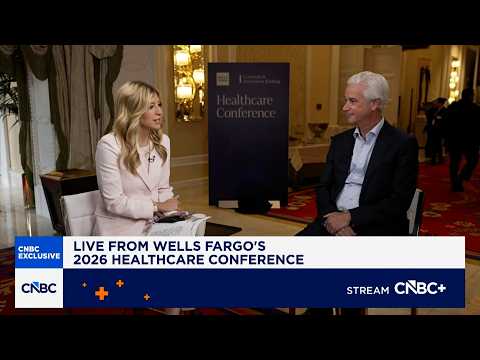
Wells Fargo — Investor Video Playlist





Industry Resources
| Financials Resources |
| Federal Reserve Economic Data |
| Federal Reserve |
| FDIC Data |
| American Banker |
| The Banker |
| Banking Technology |
| Diversified Banks Resources |
| Retail Banker International |
| International Banker |
| Global Finance Magazine |
External Quote Links
| Y Finance | Barrons |
| TradingView | Morningstar |
| SeekingAlpha | ValueLine |
| Motley Fool | Robinhood |
| CNBC | Etrade |
| MarketWatch | Unusual Whales |
| YCharts | Perplexity Finance |
| FinViz |
Prefer one of these to Trefis? Tell us why.