
Las Vegas Sands (LVS)
Market Price (9/29/2026): $38.8 | Market Cap: $25.4 BilInvestor Relations Sector: Consumer Discretionary | Industry: Casinos & Gaming
Las Vegas Sands (LVS)
Market Price (9/29/2026): $38.8Market Cap: $25.4 BilSector: Consumer DiscretionaryIndustry: Casinos & Gaming
Investment Highlights Why It Matters Detailed financial logic regarding cash flow yields vs trend-riding momentum.
Attractive yieldTotal YieldTotal Yield = Earnings Yield + Dividend Yield, Earnings Yield = Net Income / Market Cap Dividend Yield = Total Dividends / Market Cap is 11%, Dividend Yield is 3.7%, ERPEquity Risk Premium (ERP) = Total Yield - Risk Free Rate, Reflects the premium above risk free assets offered by the investment. is 6.6%, FCF Yield is 11% Strong revenue growthRev Chg LTMRevenue Change % Last Twelve Months (LTM) is 18% Attractive operating marginsOp Mgn LTMOperating Margin = Operating Income / Revenue Reflects profitability before taxes and before impact of capital structure (interest payments). is 23% Attractive cash flow generationCFO/Rev LTMCash Flow from Operations / Revenue (Sales), Last Twelve Months (LTM) is 27%, FCF/Rev LTMFree Cash Flow / Revenue (Sales), Last Twelve Months (LTM) is 20%, CFO LTM is 3.7 Bil, FCF LTM is 2.7 Bil Valuation becoming less expensiveP/S 6M Chg %Price/Sales change over 6 months. Declining P/S indicates valuation has become less expensive. is -30% Stock buyback supportStock Buyback 3Y Total is 6.0 Bil Low stock price volatilityVol 12M is 35% Megatrend and thematic driversMegatrends include Experience Economy & Premiumization, and Markets & Betting. Themes include Experiential Retail, Travel & Leisure Tech, Show more. | Weak multi-year price returns2Y Excs Rtn is -38%, 3Y Excs Rtn is -88% | Weak revenue growthRev Chg QQuarterly Revenue Change % is -0.7% Key risksLVS key risks include [1] its complete operational dependence on the Macao and Singapore markets and [2] a substantial debt burden. |
| Attractive yieldTotal YieldTotal Yield = Earnings Yield + Dividend Yield, Earnings Yield = Net Income / Market Cap Dividend Yield = Total Dividends / Market Cap is 11%, Dividend Yield is 3.7%, ERPEquity Risk Premium (ERP) = Total Yield - Risk Free Rate, Reflects the premium above risk free assets offered by the investment. is 6.6%, FCF Yield is 11% |
| Strong revenue growthRev Chg LTMRevenue Change % Last Twelve Months (LTM) is 18% |
| Attractive operating marginsOp Mgn LTMOperating Margin = Operating Income / Revenue Reflects profitability before taxes and before impact of capital structure (interest payments). is 23% |
| Attractive cash flow generationCFO/Rev LTMCash Flow from Operations / Revenue (Sales), Last Twelve Months (LTM) is 27%, FCF/Rev LTMFree Cash Flow / Revenue (Sales), Last Twelve Months (LTM) is 20%, CFO LTM is 3.7 Bil, FCF LTM is 2.7 Bil |
| Valuation becoming less expensiveP/S 6M Chg %Price/Sales change over 6 months. Declining P/S indicates valuation has become less expensive. is -30% |
| Stock buyback supportStock Buyback 3Y Total is 6.0 Bil |
| Low stock price volatilityVol 12M is 35% |
| Megatrend and thematic driversMegatrends include Experience Economy & Premiumization, and Markets & Betting. Themes include Experiential Retail, Travel & Leisure Tech, Show more. |
| Weak multi-year price returns2Y Excs Rtn is -38%, 3Y Excs Rtn is -88% |
| Weak revenue growthRev Chg QQuarterly Revenue Change % is -0.7% |
| Key risksLVS key risks include [1] its complete operational dependence on the Macao and Singapore markets and [2] a substantial debt burden. |
Qualitative Assessment
AI Analysis | Feedback
Las Vegas Sands (LVS) stock has lost about 25% since 5/31/2026 because of the following key factors:
1. Las Vegas Sands reported a significant earnings miss for its fiscal Q2 2026 (ended June 30, 2026). On July 22, 2026, the company announced diluted earnings per share (EPS) of $0.59, falling short of the consensus estimate of $0.76 by $0.17. Quarterly net revenue also missed expectations, coming in at $3.15 billion against analyst estimates of $3.31 billion, and was a decrease from $3.18 billion in the prior year quarter. Operating income declined to $618 million from $783 million in fiscal Q2 2025, and net income was $373 million compared to $519 million in the same period last year. This substantial underperformance directly contributed to a stock decline of over 5% in after-hours trading immediately following the announcement.
2. Weakness in the Macau gaming market, a key region for Las Vegas Sands, negatively impacted performance during fiscal Q2 and early fiscal Q3 2026. Gross gaming revenue (GGR) in Macau fell 12.1% year-on-year to US$2.29 billion in June 2026 and was down 18.1% compared to May 2026, partly due to the ongoing FIFA World Cup. Although GGR recovered slightly in July, rising 9.4% from June, it still represented an 8.4% year-on-year decline at US$2.51 billion. August 2026 saw an 8.1% increase in GGR from July to US$2.71 billion but still marked a 1.2% year-on-year decrease. Management specifically cited weak VIP hold in Macau and the World Cup's impact on Asian visitation as factors contributing to the fiscal Q2 2026 shortfall.
Show more
Las Vegas Sands (LVS) stock has lost about 25% since 5/31/2026 because of the following key factors:
1. Las Vegas Sands reported a significant earnings miss for its fiscal Q2 2026 (ended June 30, 2026). On July 22, 2026, the company announced diluted earnings per share (EPS) of $0.59, falling short of the consensus estimate of $0.76 by $0.17. Quarterly net revenue also missed expectations, coming in at $3.15 billion against analyst estimates of $3.31 billion, and was a decrease from $3.18 billion in the prior year quarter. Operating income declined to $618 million from $783 million in fiscal Q2 2025, and net income was $373 million compared to $519 million in the same period last year. This substantial underperformance directly contributed to a stock decline of over 5% in after-hours trading immediately following the announcement.
2. Weakness in the Macau gaming market, a key region for Las Vegas Sands, negatively impacted performance during fiscal Q2 and early fiscal Q3 2026. Gross gaming revenue (GGR) in Macau fell 12.1% year-on-year to US$2.29 billion in June 2026 and was down 18.1% compared to May 2026, partly due to the ongoing FIFA World Cup. Although GGR recovered slightly in July, rising 9.4% from June, it still represented an 8.4% year-on-year decline at US$2.51 billion. August 2026 saw an 8.1% increase in GGR from July to US$2.71 billion but still marked a 1.2% year-on-year decrease. Management specifically cited weak VIP hold in Macau and the World Cup's impact on Asian visitation as factors contributing to the fiscal Q2 2026 shortfall.
3. Singapore experienced moderating international visitor arrivals during fiscal Q2 and Q3 2026, despite strong operational performance from Marina Bay Sands. While Marina Bay Sands delivered $689 million in EBITDA with a 50% margin in fiscal Q2 2026, broader tourism trends showed signs of slowing. Singapore welcomed 1.2 million visitors in June 2026, a 5% decrease compared to June 2025. First-half 2026 international visitor arrivals were down 2% year-on-year to 8.2 million. This trend continued into fiscal Q3 2026, with August 2026 recording 1.61 million international visitors, a 0.3% year-on-year decrease and a 1.2% decline from July 2026. The Singapore Tourism Board expects visitor demand to moderate amid global uncertainties, potentially impacting future growth in this key market.
4. Analyst sentiment shifted with downgrades to Las Vegas Sands' stock during the period. On July 30, 2026, Argus Research downgraded LVS to a "Hold" rating. Subsequently, on September 2, 2026, Wolfe Research initiated coverage of the stock with a "Hold" rating. These downgrades reflect a cautious outlook on the company's near-term prospects and likely contributed to the downward pressure on the stock price.
Show less
Stock Movement Drivers
Fundamental Drivers
The -22.8% change in LVS stock from 5/31/2026 to 9/28/2026 was primarily driven by a -19.5% change in the company's P/E Multiple.| (LTM values as of) | 5312026 | 9282026 | Change |
|---|---|---|---|
| Stock Price ($) | 50.25 | 38.78 | -22.8% |
| Change Contribution By: | |||
| Total Revenues ($ Mil) | 13,740 | 13,719 | -0.2% |
| Net Income Margin (%) | 13.4% | 12.6% | -6.1% |
| P/E Multiple | 18.3 | 14.7 | -19.5% |
| Shares Outstanding (Mil) | 669 | 654 | 2.3% |
| Cumulative Contribution | -22.8% |
Market Drivers
5/31/2026 to 9/28/2026| Return | Correlation | |
|---|---|---|
| LVS | -22.8% | |
| Market (SPY) | 1.5% | 0.9% |
| Sector (XLY) | -9.6% | 22.9% |
Fundamental Drivers
The -30.8% change in LVS stock from 2/28/2026 to 9/28/2026 was primarily driven by a -36.9% change in the company's P/E Multiple.| (LTM values as of) | 2282026 | 9282026 | Change |
|---|---|---|---|
| Stock Price ($) | 56.03 | 38.78 | -30.8% |
| Change Contribution By: | |||
| Total Revenues ($ Mil) | 13,017 | 13,719 | 5.4% |
| Net Income Margin (%) | 12.5% | 12.6% | 0.7% |
| P/E Multiple | 23.3 | 14.7 | -36.9% |
| Shares Outstanding (Mil) | 676 | 654 | 3.4% |
| Cumulative Contribution | -30.8% |
Market Drivers
2/28/2026 to 9/28/2026| Return | Correlation | |
|---|---|---|
| LVS | -30.8% | |
| Market (SPY) | 12.2% | 25.8% |
| Sector (XLY) | -6.4% | 31.6% |
Fundamental Drivers
The -31.3% change in LVS stock from 8/31/2025 to 9/28/2026 was primarily driven by a -47.1% change in the company's P/E Multiple.| (LTM values as of) | 8312025 | 9282026 | Change |
|---|---|---|---|
| Stock Price ($) | 56.41 | 38.78 | -31.3% |
| Change Contribution By: | |||
| Total Revenues ($ Mil) | 11,615 | 13,719 | 18.1% |
| Net Income Margin (%) | 12.2% | 12.6% | 3.6% |
| P/E Multiple | 27.8 | 14.7 | -47.1% |
| Shares Outstanding (Mil) | 695 | 654 | 6.3% |
| Cumulative Contribution | -31.3% |
Market Drivers
8/31/2025 to 9/28/2026| Return | Correlation | |
|---|---|---|
| LVS | -31.3% | |
| Market (SPY) | 20.0% | 23.0% |
| Sector (XLY) | -5.2% | 25.1% |
Fundamental Drivers
The -24.9% change in LVS stock from 8/31/2023 to 9/28/2026 was primarily driven by a -98.1% change in the company's P/E Multiple.| (LTM values as of) | 8312023 | 9282026 | Change |
|---|---|---|---|
| Stock Price ($) | 51.66 | 38.78 | -24.9% |
| Change Contribution By: | |||
| Total Revenues ($ Mil) | 6,784 | 13,719 | 102.2% |
| Net Income Margin (%) | 0.8% | 12.6% | 1574.5% |
| P/E Multiple | 773.9 | 14.7 | -98.1% |
| Shares Outstanding (Mil) | 764 | 654 | 16.8% |
| Cumulative Contribution | -24.9% |
Market Drivers
8/31/2023 to 9/28/2026| Return | Correlation | |
|---|---|---|
| LVS | -24.9% | |
| Market (SPY) | 76.5% | 41.0% |
| Sector (XLY) | 30.9% | 39.9% |
Price Returns Compared
| 2021 | 2022 | 2023 | 2024 | 2025 | 2026 | Total [1] | |
|---|---|---|---|---|---|---|---|
| Returns | |||||||
| LVS Return | -37% | 28% | 3% | 6% | 29% | -39% | -30% |
| Peers Return | 11% | -28% | 12% | -12% | 2% | -5% | -25% |
| S&P 500 Return | 27% | -19% | 24% | 23% | 16% | 13% | 106% |
Monthly Win Rates [3] | |||||||
| LVS Win Rate | 42% | 50% | 50% | 42% | 50% | 33% | |
| Peers Win Rate | 53% | 37% | 52% | 47% | 62% | 42% | |
| S&P 500 Win Rate | 75% | 42% | 67% | 75% | 67% | 56% | |
Max Drawdowns [4] | |||||||
| LVS Max Drawdown | -49% | -37% | -32% | -31% | -40% | -40% | |
| Peers Max Drawdown | -39% | -48% | -34% | -33% | -36% | -30% | |
| S&P 500 Max Drawdown | -5% | -25% | -10% | -8% | -19% | -9% | |
[1] Cumulative total returns since the beginning of 2021
[2] Peers: MGM, WYNN, CZR, BYD, PENN. See LVS Returns vs. Peers.
[3] Win Rate = % of calendar months in which monthly returns were positive
[4] Max drawdown represents maximum peak-to-trough decline within a year
[5] 2026 data is for the year up to 9/28/2026 (YTD)
How Low Can It Go
| Event | LVS | S&P 500 |
|---|---|---|
| 2025 US Tariff Shock | ||
| % Loss | -30.3% | -18.8% |
| % Gain to Breakeven | 43.5% | 23.1% |
| Time to Breakeven | 80 days | 79 days |
| Summer-Fall 2023 Five Percent Yield Shock | ||
| % Loss | -22.8% | -9.5% |
| % Gain to Breakeven | 29.6% | 10.5% |
| Time to Breakeven | 687 days | 24 days |
| 2022 Inflation Shock & Fed Tightening | ||
| % Loss | -22.4% | -24.5% |
| % Gain to Breakeven | 28.9% | 32.4% |
| Time to Breakeven | 70 days | 427 days |
| 2020 COVID-19 Crash | ||
| % Loss | -44.4% | -33.7% |
| % Gain to Breakeven | 79.8% | 50.9% |
| Time to Breakeven | 2060 days | 140 days |
| Q4 2018 Fed Policy Error / Growth Scare | ||
| % Loss | -19.3% | -19.2% |
| % Gain to Breakeven | 23.8% | 23.8% |
| Time to Breakeven | 44 days | 105 days |
| 2015-2016 China Devaluation / Global Growth Scare | ||
| % Loss | -28.2% | -12.2% |
| % Gain to Breakeven | 39.2% | 13.9% |
| Time to Breakeven | 152 days | 62 days |
In The Past
Las Vegas Sands's stock fell -30.3% during the 2025 US Tariff Shock. Such a loss loss requires a 43.5% gain to breakeven.
Preserve Wealth
Limiting losses and compounding gains is essential to preserving wealth.
Asset Allocation
Actively managed asset allocation strategies protect wealth. Learn more.
| Event | LVS | S&P 500 |
|---|---|---|
| 2025 US Tariff Shock | ||
| % Loss | -30.3% | -18.8% |
| % Gain to Breakeven | 43.5% | 23.1% |
| Time to Breakeven | 80 days | 79 days |
| Summer-Fall 2023 Five Percent Yield Shock | ||
| % Loss | -22.8% | -9.5% |
| % Gain to Breakeven | 29.6% | 10.5% |
| Time to Breakeven | 687 days | 24 days |
| 2022 Inflation Shock & Fed Tightening | ||
| % Loss | -22.4% | -24.5% |
| % Gain to Breakeven | 28.9% | 32.4% |
| Time to Breakeven | 70 days | 427 days |
| 2020 COVID-19 Crash | ||
| % Loss | -44.4% | -33.7% |
| % Gain to Breakeven | 79.8% | 50.9% |
| Time to Breakeven | 2060 days | 140 days |
| 2015-2016 China Devaluation / Global Growth Scare | ||
| % Loss | -28.2% | -12.2% |
| % Gain to Breakeven | 39.2% | 13.9% |
| Time to Breakeven | 152 days | 62 days |
| 2014-2016 Oil Price Collapse | ||
| % Loss | -41.3% | -6.8% |
| % Gain to Breakeven | 70.2% | 7.3% |
| Time to Breakeven | 404 days | 15 days |
| 2011 US Debt Ceiling Crisis & European Contagion | ||
| % Loss | -21.3% | -17.9% |
| % Gain to Breakeven | 27.0% | 21.8% |
| Time to Breakeven | 25 days | 123 days |
| 2010 Eurozone Sovereign Debt Crisis / Flash Crash | ||
| % Loss | -24.2% | -15.4% |
| % Gain to Breakeven | 32.0% | 18.2% |
| Time to Breakeven | 26 days | 125 days |
| 2008-2009 Global Financial Crisis | ||
| % Loss | -98.7% | -53.4% |
| % Gain to Breakeven | 7499.8% | 114.4% |
| Time to Breakeven | 3369 days | 1085 days |
In The Past
Las Vegas Sands's stock fell -30.3% during the 2025 US Tariff Shock. Such a loss loss requires a 43.5% gain to breakeven.
Preserve Wealth
Limiting losses and compounding gains is essential to preserving wealth.
Asset Allocation
Actively managed asset allocation strategies protect wealth. Learn more.
About Las Vegas Sands (LVS)
Las Vegas Sands (LVS) is a global developer, owner, and operator of large-scale integrated resorts. These properties are designed to offer a comprehensive experience, combining various revenue-generating amenities under one roof, positioning the company as a significant player in both the leisure and business tourism industries.
The company's main products and services revolve around its integrated resort complexes, which feature luxury hotel accommodations, extensive gaming facilities, diverse entertainment options, high-end retail malls, and significant convention and exhibition spaces. These resorts also typically include celebrity chef restaurants and a wide array of other amenities catering to diverse guest needs. Key properties include The Venetian Macao and Marina Bay Sands in Asia, and The Venetian Resort Hotel Casino in Las Vegas.
Las Vegas Sands primarily serves a broad customer base that includes high-net-worth individuals attracted to gaming and luxury, leisure travelers seeking entertainment and hospitality experiences, and business clients utilizing the convention and exhibition facilities for events and conferences. The company's primary markets are Asia, particularly Macao and Singapore, where it has a dominant presence, as well as the United States, specifically Las Vegas.
AI Analysis | Feedback
Here are 1-3 brief analogies for Las Vegas Sands (LVS):
- MGM Resorts International, but with a greater focus on luxury properties and high-roller gaming in major international hubs like Macao and Singapore.
- A blend of Hilton Hotels and Caesars Entertainment, focused on creating massive, high-end integrated resorts with gaming, luxury accommodations, and convention facilities.
- Like Disney Parks, but for adults, combining luxury hotels, casinos, and world-class entertainment and convention centers into massive destination resorts.
AI Analysis | Feedback
- Gaming Operations: Provides casino gaming experiences through various table games and slot machines within its integrated resorts.
- Hotel Accommodations: Offers luxury lodging and guest room services at its high-end resort properties.
- Convention and Exhibition Facilities: Manages extensive venues for hosting meetings, conventions, and trade shows.
- Retail Malls: Operates upscale shopping centers featuring a variety of retail brands within its integrated resorts.
- Food and Beverage Services: Delivers diverse dining options through numerous restaurants, including celebrity chef establishments, and bars.
- Entertainment Services: Curates and hosts a range of live shows, attractions, and events for guests at its resorts.
AI Analysis | Feedback
Major Customers of Las Vegas Sands (LVS)
Las Vegas Sands (LVS) primarily sells its services and experiences directly to individuals rather than other companies. Its integrated resorts cater to a diverse clientele. The major categories of customers it serves include:
- Leisure Tourists and Gamblers: This category encompasses individuals and groups visiting LVS properties for leisure, vacation, entertainment, and gaming activities. It includes both mass-market tourists seeking a comprehensive resort experience (accommodations, dining, entertainment, shopping) and high-stakes gamblers participating in casino activities.
- Business Travelers and Convention/Exhibition Attendees: Individuals who attend or participate in conventions, trade shows, corporate meetings, and other business events hosted at LVS's extensive convention and exhibition facilities, such as the Sands Expo and Convention Center in Las Vegas or convention spaces within its Asian properties.
- Luxury Shoppers and Diners: This category includes patrons who frequent the high-end retail malls, celebrity chef restaurants, and other premium amenities within LVS integrated resorts, often seeking a luxury lifestyle experience independent of or in addition to staying overnight or gaming.
AI Analysis | Feedback
- Light & Wonder, Inc. (LNW)
- International Game Technology PLC (IGT)
- Aristocrat Leisure Limited (ALL.AX)
AI Analysis | Feedback
Patrick Dumont is Chairman and Chief Executive Officer. Mr. Dumont became Chairman and CEO of Las Vegas Sands on March 1, 2026, after serving as President and Chief Operating Officer since January 2021. He joined Sands in 2010 and previously held senior strategy and finance roles, including Chief Financial Officer starting in 2016. Mr. Dumont has over 25 years of experience in management, development, operations, and corporate finance. He was instrumental in repositioning the company's property portfolio by executing the sales of both Sands Bethlehem and The Venetian Las Vegas. Prior to joining Sands, he worked in investment banking at Miller Buckfire and Bear Stearns. Mr. Dumont also serves as the governor of the Dallas Mavericks, an NBA team majority-owned by him and his family. Robert G. Goldstein, who previously served as Chairman and CEO, transitioned to a Senior Advisor role on March 1, 2026.
Randy Hyzak is Executive Vice President and Chief Financial Officer. Mr. Hyzak was appointed Executive Vice President and Chief Financial Officer of Las Vegas Sands in January 2021. Before this, he served as Senior Vice President & Chief Accounting Officer within the company. Prior to joining Las Vegas Sands, Mr. Hyzak held the position of Vice President & Chief Accounting Officer at Freescale Semiconductor, Ltd.. He began his career as a Senior Manager at Ernst & Young LLP.
D. Zachary Hudson is Executive Vice President and Global General Counsel. Mr. Hudson oversees the company's legal, compliance, and government relations functions, ensuring adherence to laws in all operating jurisdictions and advising leadership on company interests. He joined Las Vegas Sands in September 2019.
Miriam Adelson is the majority shareholder of Las Vegas Sands. Dr. Adelson, an Israeli-American physician, businesswoman, and philanthropist, became the owner of Las Vegas Sands after the passing of her husband, Sheldon Adelson, in 2021. She remains the majority owner, controlling approximately 56.6% of the company's outstanding stock through personal ownership and family trusts. Dr. Adelson is also the publisher of Israel Hayom and, with her family, owns the Las Vegas Review-Journal. She founded addiction treatment clinics in Israel and Las Vegas.
AI Analysis | Feedback
The key risks to Las Vegas Sands (LVS) primarily stem from its significant concentration in the integrated resort and gaming markets of Asia, particularly Macao and Singapore. These risks include:
-
Regulatory and Geopolitical Risks in Asia: Las Vegas Sands faces substantial risks due to the highly regulated nature of the gaming industry in its key Asian markets. In Macao, there is an ongoing push from the government to diversify the economy away from gaming, which could adversely affect foreign-owned casinos and their investors. Beijing's directives could lead to tighter oversight and increased political risks for businesses operating in the region. The company is subject to extensive regulations, including gaming laws and anti-corruption measures, and any changes or non-compliance could significantly impact operations and revenue streams. Furthermore, escalating U.S.-China trade tensions and broader geopolitical headwinds could result in increased regulatory scrutiny or even affect the renewal of gaming licenses in Macao, although forced sales are currently deemed unlikely. The significant increase in suspicious transaction reports (STRs) from Macao gaming operators also highlights ongoing risks of money laundering and illicit activities, potentially leading to more stringent security and regulatory oversight.
-
Economic Fluctuations, Market Dependence, and Competition in Asian Markets: Las Vegas Sands' business performance is heavily dependent on the economic health of China, the regulatory environment set by the Beijing government, and tourism flows into Macao and Singapore due to its concentrated operations in these two regions. A weakening Chinese economy and broader macroeconomic challenges are anticipated to put pressure on Macao's gaming revenues. The company also operates within a highly competitive global integrated resort industry, facing strong rivals such as MGM Resorts International, Wynn Resorts, Galaxy Entertainment Group, and Melco Resorts & Entertainment. These competitors actively vie for market share through various strategies, including pricing, service innovation, and brand development. Additionally, Macao's position as a leading casino hub is threatened by emerging gaming markets across Asia, including Japan and Thailand, which could divert visitors and revenue.
-
Threat of Online Gaming: The growing prevalence of regulated digital gambling markets and the potential legalization of online casinos present a risk to traditional brick-and-mortar casino operators like Las Vegas Sands. As consumers increasingly turn to online platforms for their convenience and accessibility, land-based resorts could see a decline in patronage and revenue. Las Vegas Sands' decision to withdraw its bid for a New York gambling license was partly influenced by concerns regarding the potential authorization of online casino licenses in the state, highlighting the perceived threat of iGaming to its business model.
AI Analysis | Feedback
The potential legalization and development of integrated resorts in new Asian jurisdictions, particularly Thailand, represents a clear emerging threat. This would introduce significant new competition for the same pool of high-value customers currently served by Las Vegas Sands' properties in Macao and Singapore, potentially diluting market share and revenue in the lucrative Asian gaming and tourism market.
AI Analysis | Feedback
Las Vegas Sands Corp. (LVS) operates integrated resorts primarily in Macao and Singapore, following the sale of its Las Vegas properties in February 2022. The addressable markets for its main products and services in these regions are as follows:
Macao
- Gaming: The gross gaming revenue (GGR) in Macao's casino industry was approximately US$30.85 billion in 2025.
- Hospitality: Macao's hotels recorded 14.56 million guests in 2025, with an average occupancy rate of 89.4% across the city. Five-star hotels, a key segment for LVS, achieved an average occupancy rate of 92.9% in 2025.
- MICE (Meetings, Incentives, Conventions, and Exhibitions): MICE-driven receipts from non-gaming industries in Macao increased to 6.28 billion patacas (approximately US$780 million) in 2025.
- Luxury Retail: The value of retail sales in Macao, which includes luxury goods, decreased by 15% year-on-year to MOP17.58 billion (approximately US$2.18 billion) in the first quarter of 2025.
Singapore
- Gaming (Casino Gross Gaming Revenue): The combined gaming revenue from Singapore's two integrated resorts (Marina Bay Sands and Resorts World Sentosa) reached S$7.05 billion (approximately US$5.20 billion) in 2025.
- Hospitality: The Singapore hospitality market size is expected to grow from approximately US$21.87 billion in 2025 to US$23.28 billion in 2026.
- MICE (Meetings, Incentives, Conventions, and Exhibitions): The Singapore MICE market size was valued at US$3.2 billion in 2024 and is projected to reach US$4.8 billion in 2025.
- Luxury Retail: Luxury sales in Singapore are expected to climb to US$13.9 billion in 2025.
AI Analysis | Feedback
Las Vegas Sands (LVS) is expected to drive future revenue growth over the next 2-3 years through several key initiatives and market trends:
Continued Growth and Recovery in the Macao Market, particularly in Premium Segments: Las Vegas Sands anticipates sustained growth in the Macao market, with expectations for both gaming and non-gaming revenue to increase. The company believes the Macao market will grow significantly in the years ahead. This growth is notably propelled by the premium segments, which aligns with LVS's strategic focus.
Sustained Strong Performance and Ongoing Enhancements at Marina Bay Sands in Singapore: Marina Bay Sands continues to deliver record performance, achieving its highest-ever quarterly EBITDA. Capital investment programs are underway to further enhance the property, including a significant renovation of Tower 3 scheduled for completion by the second quarter of 2025, which is expected to support future growth. These investments aim to attract high-value visitation and maintain the property's market-leading position.
Leveraging Recently Completed Capital Investment Programs and Increased Suite Capacity: LVS has undertaken substantial capital investment programs, particularly at The Londoner Macao and Marina Bay Sands, to increase suite capacity and enhance the overall customer experience. These completed or near-completion enhancements are strategically designed to attract more high-value business to their integrated resorts in both Macao and Singapore.
Strategic Market Share Gains in Macao: The company is well-positioned for continued success in Macao and expects to achieve strategic market share gains in the upcoming quarters. This is supported by its market-leading investments and diverse product offerings designed to capture high-value tourism.
AI Analysis | Feedback
Share Repurchases
- Las Vegas Sands authorized a $2.0 billion stock repurchase program in October 2023, which was set to run until November 3, 2025.
- In October 2025, the board significantly boosted its stock repurchase program with an additional $2.0 billion, increasing the total authorization to $2.7 billion and extending the expiration date to November 3, 2027.
- The company repurchased $800 million of LVS stock in Q2 2025, and $500 million in Q4 2025. In 2024, the company utilized US$1.75 billion for common stock repurchases.
Share Issuance
- In November 2023, Las Vegas Sands announced a proposed secondary public offering of $2.0 billion of its common stock by Dr. Miriam Adelson and The Miriam Adelson Trust. The company did not receive any proceeds from this sale.
Outbound Investments
- Las Vegas Sands increased its ownership in Sands China Ltd. (SCL) through various stock purchases, including $179 million in Q2 and July 2025 (reaching 73.4% ownership) and $66 million in Q4 2025 (reaching 74.8% ownership as of December 31, 2025). In October 2024, LVS acquired $44 million of SCL stock, increasing its ownership percentage to 71.31%.
- The company completed its exit from the US market by selling The Venetian Resort Hotel Casino and the Sands Expo and Convention Center in Las Vegas, Nevada, in 2022.
Capital Expenditures
- Las Vegas Sands is undertaking a significant expansion of Marina Bay Sands in Singapore, with an estimated investment of approximately $3.0 billion for a new luxury hotel tower, expanded convention center, and shopping mall. The larger Marina Bay Sands Expansion Project is expected to be an $8 billion development, with construction anticipated to be completed by June 2030 and opening in January 2031.
- The company is investing $3.8 billion in Macau, primarily focused on non-gaming projects such as meeting spaces and entertainment facilities, following the renewal of its gaming license.
- Capital expenditures for fiscal year 2024 amounted to $1.58 billion. Ongoing capital investments are focused on property enhancements and renovations in both Singapore and Macau, particularly in the premium and luxury segments.

Peer Outperformance in Casinos & Gaming
| Industry | Names | 1Y med | 3Y med | 5Y med | Top 3 by 5Y |
|---|---|---|---|---|---|
| Education Services | 14 | -22.8% | 70.2% | 62.0% | LINC 228% · CVSA 207% · PRDO 201% |
| Homebuilding | 18 | -6.7% | 33.9% | 50.4% | GRBK 222% · PHM 161% · TOL 150% |
| Specialty Stores | 7 | 5.9% | 41.7% | 18.8% | SIG 29% · ASO 24% · FIVE 23% |
| Hotels, Resorts & Cruise Lines | 22 | 16.7% | 44.9% | -1.8% | RCL 177% · MAR 146% · HLT 140% |
| Home Improvement Retail | 5 | -27.3% | -4.1% | -2.3% | HVT 10% · LOW 0% · HD -2% |
| Automotive Retail | 18 | -20.4% | -6.6% | -9.1% | MUSA 213% · PAG 116% · ORLY 107% |
| Footwear | 10 | 49.7% | 44.9% | -10.6% | WEYS 175% · DECK 26% · SHOO 19% |
| Distributors | 4 | -11.8% | -25.2% | -14.4% | ARMK 137% · GPC 19% · LKQ -48% |
| Restaurants | 35 | -7.7% | -12.5% | -16.0% | EAT 296% · CAKE 148% · BH 104% |
| Home Furnishings | 4 | -7.6% | 24.3% | -16.8% | SGI 36% · LZB -2% · MHK -32% |
| Specialized Consumer Services | 10 | -15.7% | 12.7% | -19.7% | HRB 89% · FTDR 77% · SCI 38% |
| Leisure Products | 13 | -25.8% | -21.6% | -38.9% | GOLF 86% · HAS 19% · MCFT -22% |
| Household Appliances | 18 | -3.4% | -0.6% | -41.9% | FLXS 211% · HBB 179% · KEQU 161% |
| Leisure Facilities | 11 | -19.9% | -14.0% | -42.8% | OSW 138% · JAKK 116% · ESCA 17% |
| Automotive Parts & Equipment | 37 | -12.8% | -10.8% | -43.6% | MOD 1412% · GTX 258% · CAAS 78% |
| Apparel Retail | 26 | 0.1% | 10.9% | -44.5% | ANF 229% · URBN 141% · ROST 118% |
| Casinos & Gaming ← | 21 | -20.2% | -28.1% | -44.8% | MCRI 93% · RRR 23% · LVS 14% |
| Computer & Electronics Retail | 3 | -9.3% | 45.6% | -45.5% | BBY 4% · GME -46% · UPBD -64% |
| Apparel, Accessories & Luxury Goods | 29 | -12.1% | 4.9% | -50.2% | RL 237% · TPR 233% · ELA 210% |
| Broadline Retail | 15 | 0.0% | 22.9% | -53.7% | DDS 338% · EBAY 67% · AMZN 49% |
| Consumer Electronics | 11 | -13.1% | -23.7% | -73.4% | AXIL 2792% · GRMN 106% · SONO -45% |
| Automobile Manufacturers | 8 | -77.6% | -49.7% | -74.6% | GM 59% · TSLA 37% · F 18% |
| Other Specialty Retail | 18 | -37.5% | -46.9% | -80.1% | TLF 107% · BBW 73% · WINA 58% |
Latest Trefis Analyses
Research & Analysis
Invest in Strategies
Wealth Management
Peer Comparisons
| Peers to compare with: |
Financials
| Median | |
|---|---|
| Name | |
| Mkt Price | 35.37 |
| Mkt Cap | 7.1 |
| Rev LTM | 9,531 |
| Op Inc LTM | 1,206 |
| FCF LTM | 699 |
| FCF 3Y Avg | 570 |
| CFO LTM | 1,378 |
| CFO 3Y Avg | 1,342 |
Growth & Margins
| Median | |
|---|---|
| Name | |
| Rev Chg LTM | 4.7% |
| Rev Chg 3Y Avg | 5.0% |
| Rev Chg Q | 2.0% |
| QoQ Delta Rev Chg LTM | 0.5% |
| Op Inc Chg LTM | -3.6% |
| Op Inc Chg 3Y Avg | 74.7% |
| Op Mgn LTM | 17.3% |
| Op Mgn 3Y Avg | 18.6% |
| QoQ Delta Op Mgn LTM | -0.4% |
| CFO/Rev LTM | 14.6% |
| CFO/Rev 3Y Avg | 16.8% |
| FCF/Rev LTM | 6.8% |
| FCF/Rev 3Y Avg | 8.1% |
Segment Financials
Revenue by Segment| $ Mil | 2025 | 2024 | 2023 | 2022 | 2021 |
|---|---|---|---|---|---|
| Marina Bay Sands | 5,590 | 4,230 | 3,849 | 2,516 | 1,370 |
| The Venetian Macao | 2,745 | 2,831 | 2,682 | 682 | 1,256 |
| The Londoner Macao | 2,556 | 1,984 | 1,792 | 350 | 588 |
| The Parisian Macao | 872 | 973 | 879 | 188 | 357 |
| The Plaza Macao and Four Seasons Macao | 872 | 872 | 779 | 313 | 546 |
| Sands Macao | 294 | 322 | 322 | 65 | 122 |
| Inter-company Royalties | 293 | 250 | 224 | 107 | 83 |
| Ferry Operations and Other | 131 | 125 | 105 | 29 | 28 |
| Intersegment revenues | -336 | -289 | -260 | -140 | -116 |
| Total | 13,017 | 11,298 | 10,372 | 4,110 | 4,234 |
| $ Mil | 2025 | 2024 | 2023 | 2022 | 2021 |
|---|---|---|---|---|---|
| Marina Bay Sands | 2,922 | 2,052 | 1,861 | 1,056 | 448 |
| The Venetian Macao | 946 | 1,093 | 1,054 | -25 | 297 |
| The Londoner Macao | 778 | 543 | 516 | -189 | -84 |
| The Plaza Macao and Four Seasons Macao | 313 | 321 | 308 | 81 | 219 |
| The Parisian Macao | 218 | 297 | 269 | -103 | -17 |
| Sands Macao | 31 | 56 | 59 | -81 | -69 |
| Ferry Operations and Other | 24 | 17 | 18 | -7 | -8 |
| Inter-company Royalties | 0 | 0 | 0 | 0 | |
| Pre-opening | -24 | -14 | -15 | -13 | -19 |
| Stock-based compensation | -24 | -27 | -29 | -33 | -12 |
| Amortization of leasehold interests in land | -76 | -60 | -58 | -55 | -56 |
| Loss on disposal or impairment of assets | -247 | -50 | -27 | -9 | -27 |
| Development | -269 | -228 | -205 | -143 | -109 |
| Corporate | -310 | -290 | -230 | -235 | -211 |
| Depreciation and amortization | -1,464 | -1,308 | -1,208 | -1,036 | -1,041 |
| Total | 2,818 | 2,402 | 2,313 | -792 | -689 |
| $ Mil | 2025 | 2024 | 2023 | 2022 | 2021 |
|---|---|---|---|---|---|
| Marina Bay Sands | 7,760 | 6,173 | 6,387 | 6,067 | 5,326 |
| The Londoner Macao | 4,635 | 4,665 | 4,193 | 4,489 | 4,494 |
| Corporate and Other | 3,614 | 3,353 | 5,167 | 5,422 | 1,357 |
| The Venetian Macao | 2,689 | 2,806 | 2,548 | 2,135 | 2,087 |
| The Parisian Macao | 1,636 | 1,710 | 1,802 | 1,828 | 1,962 |
| The Plaza Macao and Four Seasons Macao | 953 | 987 | 1,059 | 1,020 | 1,145 |
| Ferry Operations and Other | 375 | 719 | 335 | 870 | 132 |
| Sands Macao | 258 | 253 | 287 | 208 | 253 |
| Total | 21,920 | 20,666 | 21,778 | 22,039 | 16,756 |
Price Behavior
| Market Price | $38.78 | |
| Market Cap ($ Bil) | 25.4 | |
| First Trading Date | 12/15/2004 | |
| Distance from 52W High | -43.2% | |
| 50 Days | 200 Days | |
| DMA Price | $44.47 | $51.79 |
| DMA Trend | down | down |
| Distance from DMA | -12.8% | -25.1% |
| 3M | 1YR | |
| Volatility | 24.0% | 34.9% |
| Downside Capture | 91.93 | 112.28 |
| Upside Capture | -13.73 | 56.22 |
| Correlation (SPY) | -4.2% | 23.4% |
| 1M | 2M | 3M | 6M | 1Y | 3Y | |
|---|---|---|---|---|---|---|
| Beta | -0.80 | -0.38 | -0.12 | 0.49 | 0.61 | 0.91 |
| Up Beta | -1.89 | -1.03 | -0.82 | 0.42 | 0.20 | 0.89 |
| Down Beta | 1.67 | 0.01 | 0.44 | 0.65 | 0.55 | 1.03 |
| Up Capture | -108% | -35% | -36% | 11% | 42% | 44% |
| Bmk +ve Days | 10 | 21 | 32 | 68 | 138 | 427 |
| Stock +ve Days | 9 | 22 | 29 | 59 | 124 | 378 |
| Down Capture | 81% | -1% | 26% | 87% | 103% | 100% |
| Bmk -ve Days | 11 | 21 | 32 | 59 | 113 | 324 |
| Stock -ve Days | 12 | 20 | 34 | 66 | 124 | 369 |
[1] Upside and downside betas calculated using positive and negative benchmark daily returns respectively
Based On 1-Year Data
| Annualized Return | Annualized Volatility | Sharpe Ratio | Correlation with LVS | |
|---|---|---|---|---|
| LVS | -25.4% | 34.9% | -0.78 | - |
| Sector ETF (XLY) | -7.2% | 19.5% | -0.51 | 26.7% |
| Equity (SPY) | 17.4% | 13.0% | 0.96 | 23.6% |
| Gold (GLD) | 9.7% | 29.6% | 0.31 | 7.9% |
| Commodities (DBC) | 42.7% | 20.7% | 1.60 | -13.1% |
| Real Estate (VNQ) | 4.3% | 13.6% | 0.06 | 8.3% |
| Bitcoin (BTCUSD) | -23.0% | 44.8% | -0.46 | 13.1% |
Smart multi-asset allocation framework can stack odds in your favor. Learn How
Based On 5-Year Data
| Annualized Return | Annualized Volatility | Sharpe Ratio | Correlation with LVS | |
|---|---|---|---|---|
| LVS | 1.9% | 39.9% | 0.15 | - |
| Sector ETF (XLY) | 4.8% | 24.1% | 0.16 | 45.4% |
| Equity (SPY) | 13.5% | 17.2% | 0.60 | 45.0% |
| Gold (GLD) | 18.1% | 18.9% | 0.77 | 4.0% |
| Commodities (DBC) | 11.0% | 19.5% | 0.44 | 9.4% |
| Real Estate (VNQ) | 0.9% | 18.9% | -0.06 | 31.0% |
| Bitcoin (BTCUSD) | 14.4% | 52.4% | 0.45 | 19.2% |
Smart multi-asset allocation framework can stack odds in your favor. Learn How
Based On 10-Year Data
| Annualized Return | Annualized Volatility | Sharpe Ratio | Correlation with LVS | |
|---|---|---|---|---|
| LVS | -1.6% | 38.7% | 0.08 | - |
| Sector ETF (XLY) | 11.9% | 22.2% | 0.49 | 51.3% |
| Equity (SPY) | 15.4% | 17.9% | 0.73 | 51.3% |
| Gold (GLD) | 11.7% | 16.4% | 0.58 | 1.2% |
| Commodities (DBC) | 8.5% | 18.1% | 0.38 | 19.2% |
| Real Estate (VNQ) | 4.7% | 20.7% | 0.19 | 37.5% |
| Bitcoin (BTCUSD) | 63.8% | 66.2% | 1.03 | 13.3% |
Smart multi-asset allocation framework can stack odds in your favor. Learn How
Returns Analyses
Earnings Returns History
Updated 8/24/2026| Forward Returns | |||
|---|---|---|---|
| Earnings Date | 1D Returns | 5D Returns | 21D Returns |
| 7/22/2026 | 1.7% | 7.3% | 2.2% |
| 4/22/2026 | -8.6% | -5.5% | -12.5% |
| 1/28/2026 | -14.0% | -6.1% | -6.9% |
| 10/22/2025 | 12.4% | 16.1% | 25.9% |
| 7/23/2025 | 4.3% | 8.8% | 10.4% |
| 4/23/2025 | 6.5% | 6.7% | 17.4% |
| 1/29/2025 | 11.1% | 0.2% | 3.5% |
| 10/23/2024 | 2.8% | 3.7% | -1.5% |
| ... | |||
| SUMMARY STATS | |||
| # Positive | 15 | 16 | 15 |
| # Negative | 9 | 8 | 9 |
| Median Positive | 4.3% | 5.5% | 10.4% |
| Median Negative | -4.6% | -3.7% | -6.8% |
| Max Positive | 12.4% | 16.1% | 27.7% |
| Max Negative | -14.0% | -9.9% | -25.6% |
| Forward Returns | |||
|---|---|---|---|
| Earnings Date | 1D Returns | 5D Returns | 21D Returns |
| 7/22/2026 | 1.7% | 7.3% | 2.2% |
| 4/22/2026 | -8.6% | -5.5% | -12.5% |
| 1/28/2026 | -14.0% | -6.1% | -6.9% |
| 10/22/2025 | 12.4% | 16.1% | 25.9% |
| 7/23/2025 | 4.3% | 8.8% | 10.4% |
| 4/23/2025 | 6.5% | 6.7% | 17.4% |
| 1/29/2025 | 11.1% | 0.2% | 3.5% |
| 10/23/2024 | 2.8% | 3.7% | -1.5% |
| 7/24/2024 | -2.4% | -1.6% | 2.4% |
| 4/17/2024 | -8.7% | -8.7% | -6.8% |
| 1/24/2024 | 1.0% | -1.5% | 10.7% |
| 10/18/2023 | 2.9% | 5.8% | 10.6% |
| 7/19/2023 | -5.4% | -1.8% | -10.0% |
| 4/19/2023 | 3.7% | 4.1% | 2.2% |
| 1/25/2023 | 6.1% | 7.1% | 2.1% |
| 10/19/2022 | 5.6% | -0.4% | 24.4% |
| 7/20/2022 | 6.6% | 5.1% | 1.7% |
| 4/27/2022 | 2.4% | 6.4% | -1.9% |
| 1/26/2022 | -4.6% | 1.4% | 0.9% |
| 10/20/2021 | -1.9% | 2.0% | -2.5% |
| 7/21/2021 | -4.5% | -9.9% | -25.6% |
| 4/21/2021 | -4.0% | 1.6% | -4.9% |
| 1/27/2021 | 0.1% | 9.7% | 27.7% |
| 10/21/2020 | 8.4% | 2.0% | 27.5% |
| SUMMARY STATS | |||
| # Positive | 15 | 16 | 15 |
| # Negative | 9 | 8 | 9 |
| Median Positive | 4.3% | 5.5% | 10.4% |
| Median Negative | -4.6% | -3.7% | -6.8% |
| Max Positive | 12.4% | 16.1% | 27.7% |
| Max Negative | -14.0% | -9.9% | -25.6% |
SEC Filings
Expand for More| Report Date | Filing Date | Filing |
|---|---|---|
| 06/30/2026 | 07/24/2026 | 10-Q |
| 03/31/2026 | 04/24/2026 | 10-Q |
| 12/31/2025 | 02/06/2026 | 10-K |
| 09/30/2025 | 10/24/2025 | 10-Q |
| 06/30/2025 | 07/25/2025 | 10-Q |
| 03/31/2025 | 04/25/2025 | 10-Q |
| 12/31/2024 | 02/07/2025 | 10-K |
| 09/30/2024 | 10/25/2024 | 10-Q |
| 06/30/2024 | 07/26/2024 | 10-Q |
| 03/31/2024 | 04/19/2024 | 10-Q |
| 12/31/2023 | 02/07/2024 | 10-K |
| 09/30/2023 | 10/20/2023 | 10-Q |
| 06/30/2023 | 07/21/2023 | 10-Q |
| 03/31/2023 | 04/21/2023 | 10-Q |
| 12/31/2022 | 02/03/2023 | 10-K |
| 09/30/2022 | 10/21/2022 | 10-Q |
| Report Date | Filing Date | Filing |
|---|---|---|
| 06/30/2026 | 07/24/2026 | 10-Q |
| 03/31/2026 | 04/24/2026 | 10-Q |
| 12/31/2025 | 02/06/2026 | 10-K |
| 09/30/2025 | 10/24/2025 | 10-Q |
| 06/30/2025 | 07/25/2025 | 10-Q |
| 03/31/2025 | 04/25/2025 | 10-Q |
| 12/31/2024 | 02/07/2025 | 10-K |
| 09/30/2024 | 10/25/2024 | 10-Q |
| 06/30/2024 | 07/26/2024 | 10-Q |
| 03/31/2024 | 04/19/2024 | 10-Q |
| 12/31/2023 | 02/07/2024 | 10-K |
| 09/30/2023 | 10/20/2023 | 10-Q |
| 06/30/2023 | 07/21/2023 | 10-Q |
| 03/31/2023 | 04/21/2023 | 10-Q |
| 12/31/2022 | 02/03/2023 | 10-K |
| 09/30/2022 | 10/21/2022 | 10-Q |
| 06/30/2022 | 07/22/2022 | 10-Q |
| 03/31/2022 | 04/29/2022 | 10-Q |
| 12/31/2021 | 02/04/2022 | 10-K |
| 09/30/2021 | 10/22/2021 | 10-Q |
| 06/30/2021 | 07/23/2021 | 10-Q |
| 03/31/2021 | 04/23/2021 | 10-Q |
| 12/31/2020 | 02/05/2021 | 10-K |
| 09/30/2020 | 10/23/2020 | 10-Q |
| 06/30/2020 | 07/24/2020 | 10-Q |
| 03/31/2020 | 04/24/2020 | 10-Q |
| 12/31/2019 | 02/07/2020 | 10-K |
| 09/30/2019 | 10/25/2019 | 10-Q |
Recent Forward Guidance
Updated 7/23/2026Latest: Q2 2026 Earnings Reported 7/22/2026
| Forward Guidance | Guidance Change | |||||||
|---|---|---|---|---|---|---|---|---|
| Metric | Source | Low | Mid | High | % Chg | % Delta | Change | Prior |
| Q3 2026 Quarterly Dividend | Reported | 0.3 | 0.0% | Same New | Actual: 0.3 for Q2 2026 | |||
Prior: Q1 2026 Earnings Reported 4/22/2026
| Forward Guidance | Guidance Change | |||||||
|---|---|---|---|---|---|---|---|---|
| Metric | Source | Low | Mid | High | % Chg | % Delta | Change | Prior |
| Q2 2026 Dividends | Reported | 0.3 | 0 | Affirmed | Guidance: 0.3 for Q1 2026 | |||
Q4 2025 Earnings Reported 1/28/2026
| Forward Guidance | Guidance Change | |||||||
|---|---|---|---|---|---|---|---|---|
| Metric | Source | Low | Mid | High | % Chg | % Delta | Change | Prior |
| Q1 2026 Dividends | Reported | 0.3 | 0.0% | Affirmed | Guidance: 0.3 for Q1 2026 | |||
Insider Activity
Updated 6/18/2026| # | Owner | Title | Holding | Action | Filing Date | Price | Shares | Transacted Value | Value of Held Shares | Form |
|---|---|---|---|---|---|---|---|---|---|---|
| 1 | Forman, Charles D | Direct | Sell | 4292026 | 54.09 | 11,400 | 616,626 | 9,542,991 | Form | |
| 2 | Dumont, Patrick | Chairman & CEO | Direct | Sell | 3192026 | 54.75 | 60,165 | 3,294,034 | 28,028,824 | Form |
| 3 | Goldstein, Robert G | Chairman & CEO | Direct | Sell | 12182025 | 66.68 | 1,198,650 | Form | ||
| 4 | Goldstein, Robert G | Chairman & CEO | Direct | Sell | 12182025 | 67.58 | 51,350 | Form | ||
| 5 | Adelson, Miriam | Trust K for the benefit of one or more members of the Adelson family. | Sell | 12182025 | 67.56 | 77,991 | 5,269,072 | 1,576,407,274 | Form |
| # | Owner | Title | Holding | Action | Filing Date | Price | Shares | Transacted Value | Value of Held Shares | Form |
|---|---|---|---|---|---|---|---|---|---|---|
| 1 | Forman, Charles D | Direct | Sell | 4292026 | 54.09 | 11,400 | 616,626 | 9,542,991 | Form | |
| 2 | Dumont, Patrick | Chairman & CEO | Direct | Sell | 3192026 | 54.75 | 60,165 | 3,294,034 | 28,028,824 | Form |
| 3 | Goldstein, Robert G | Chairman & CEO | Direct | Sell | 12182025 | 66.68 | 1,198,650 | Form | ||
| 4 | Goldstein, Robert G | Chairman & CEO | Direct | Sell | 12182025 | 67.58 | 51,350 | Form | ||
| 5 | Adelson, Miriam | Trust K for the benefit of one or more members of the Adelson family. | Sell | 12182025 | 67.56 | 77,991 | 5,269,072 | 1,576,407,274 | Form | |
| 6 | Goldstein, Robert G | Chairman & CEO | Direct | Sell | 12162025 | 66.80 | 734,511 | Form | ||
| 7 | Goldstein, Robert G | Chairman & CEO | Direct | Sell | 12162025 | 66.24 | 15,489 | Form | ||
| 8 | Goldstein, Robert G | Chairman & CEO | Direct | Sell | 12122025 | 66.39 | 382,905 | Form | ||
| 9 | Goldstein, Robert G | Chairman & CEO | Direct | Sell | 12122025 | 67.03 | 17,095 | Form | ||
| 10 | Dumont, Patrick | President & COO | Direct | Sell | 12052025 | 67.96 | 135,603 | 9,216,256 | 30,353,705 | Form |
| 11 | Dumont, Patrick | President & COO | Direct | Sell | 12032025 | 68.97 | 17,352 | 1,196,767 | 30,802,554 | Form |
| 12 | Goldstein, Robert G | Chairman & CEO | Direct | Sell | 12032025 | 70.17 | 100,000 | Form | ||
| 13 | Dumont, Patrick | President & COO | Direct | Sell | 12032025 | 69.96 | 210,305 | 14,712,938 | 31,244,696 | Form |
| 14 | Hudson, D. Zachary | EVP and Global General Counsel | Direct | Sell | 12032025 | 70.37 | 53,257 | 3,747,695 | 966,532 | Form |
| 15 | Chafetz, Irwin | Direct | Sell | 12032025 | 69.76 | 30,000 | 2,092,800 | 4,949,402 | Form | |
| 16 | Hyzak, Randy | EVP & CFO | Direct | Sell | 11282025 | 66.45 | 57,545 | 3,823,646 | 3,554,805 | Form |
| 17 | Hudson, D. Zachary | EVP and Global General Counsel | Direct | Sell | 11102025 | 64.99 | 100,000 | 6,499,000 | 892,638 | Form |
| 18 | Goldstein, Robert G | Chairman & CEO | Direct | Sell | 11072025 | 63.05 | 360,000 | Form | ||
| 19 | Goldstein, Robert G | Chairman & CEO | Direct | Sell | 11072025 | 62.98 | 40,000 | Form | ||
| 20 | Goldstein, Robert G | Chairman & CEO | Direct | Sell | 11042025 | 59.20 | 400,000 | Form | ||
| 21 | Goldstein, Robert G | Chairman & CEO | Direct | Sell | 10312025 | 59.05 | 200,000 | Form | ||
| 22 | Goldstein, Robert G | Chairman & CEO | Direct | Sell | 10312025 | 58.88 | 700,000 | Form | ||
| 23 | Goldstein, Robert G | Chairman & CEO | Direct | Sell | 10292025 | 59.32 | 300,000 | Form | ||
| 24 | Forman, Charles D | Direct | Sell | 9112025 | 54.13 | 20,000 | 1,082,600 | 10,167,130 | Form | |
| 25 | Forman, Charles D | Direct | Sell | 8072025 | 52.63 | 10,000 | 526,300 | 10,937,988 | Form |
Investor Activity (13F)
Updated Sep 29, 2026Active managers (13F portfolio over $250M, at least 3 holdings) with a position over $5M that is either over 10% of their portfolio or held in a concentrated book of 50 or fewer total positions. Index/ETF, sovereign, bank, community-bank and charitable/donor-advised filers are excluded.
| Active Manager |
|---|
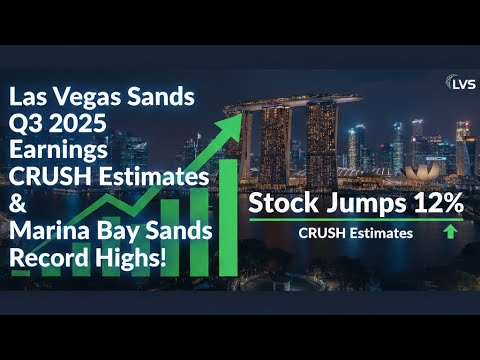
Las Vegas Sands — Investor Video Playlist



Industry Resources
| Consumer Discretionary Resources |
| Retail Dive |
| Business of Fashion (BoF) |
| WWD (Women's Wear Daily) |
| National Retail Federation (NRF) |
| McKinsey & Company - Consumer |
| Mintel Consumer Trends |
| Casinos & Gaming Resources |
| Casino.org News |
| Global Gaming Business |
| CDC Gaming Reports |
External Quote Links
| Y Finance | Barrons |
| TradingView | Morningstar |
| SeekingAlpha | ValueLine |
| Motley Fool | Robinhood |
| CNBC | Etrade |
| MarketWatch | Unusual Whales |
| YCharts | Perplexity Finance |
| FinViz |
Prefer one of these to Trefis? Tell us why.