
Is KLA Stock A Buy Today?
Today’s big story: Anthropic Below Its IPO Price: Do Giants Come Back?
You may like what KLA is doing as a business and still worry about its stock. Revenue in the quarter to September 2026 was a record $4.14 billion. That was 28.9% more than a year earlier.
The stock has gone the other way. Counting dividends, it lost 27.2% in the three months to Tuesday, November 24. The S&P 500 lost 5.9% over the same months. The shares rose 15% on Monday and fell 8.4% on Tuesday. Our data shows no single cause for the three-month fall.
So this is not an easy yes or no. KLA trades at 33.2 times its profit of the last twelve months, against 21.2 times for the S&P 500. That price leans on growth KLA plans for 2027. Nobody can check that growth yet.
What Does KLA Sell, And How Profitable Is It?
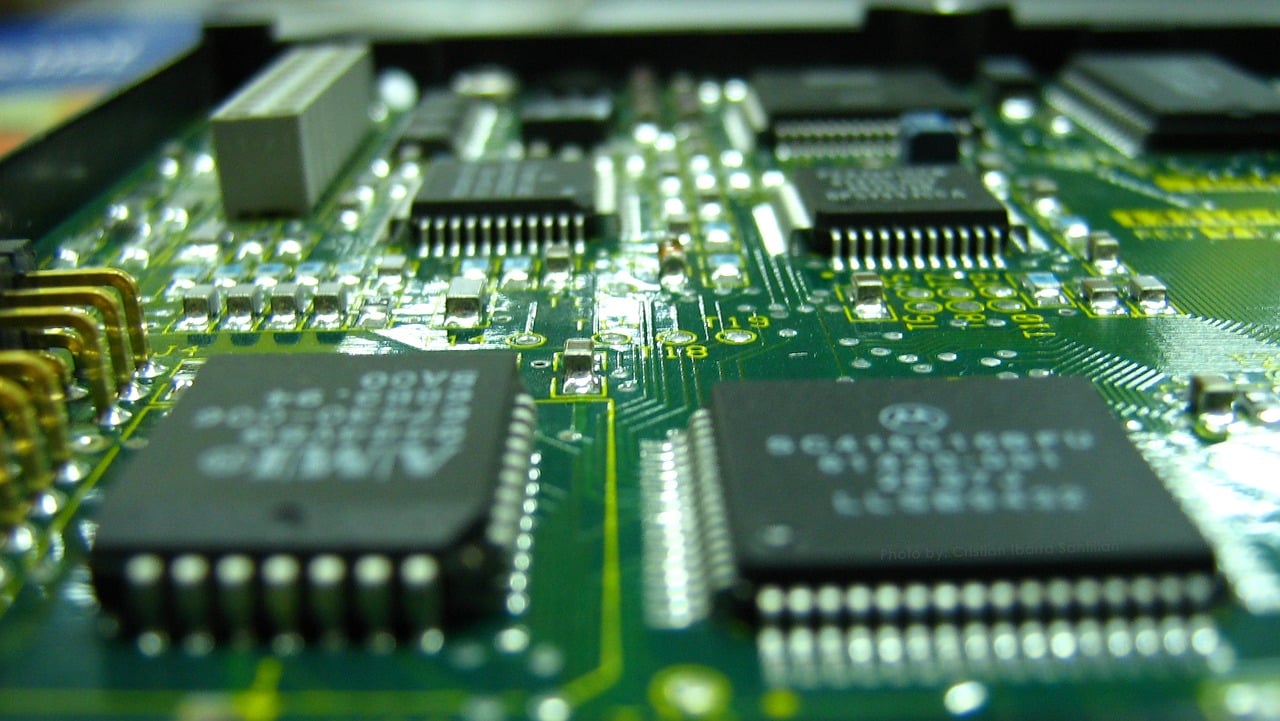
KLA makes machines that inspect and measure chips while they are being made. This is called process control. Its buyers are chipmakers. For the December quarter, KLA expects about 60% of these sales to chipmakers to come from foundry and logic makers, and about 40% from memory makers.
The business keeps much of what it sells. Operating income is the profit left after running costs, before interest and tax. Over the last twelve months it was 42.6% of KLA’s sales, against 18.9% for the S&P 500. The dividend yield, the yearly dividend as a share of the price, is 0.64%.
KLA’s yearly cash payout to owners is just 0.64% of its share price, before buybacks. If your savings have to cover your bills, a stock that pays so little leaves that job to the rest of your money. The Trefis Income Solution owns 50 companies that have each paid dividends for at least 10 years in a row, and together they yield about 3 times what the S&P 500 pays. See the Income Solution.
Growth has also sped up. Revenue rose 7.2% in the quarter to December 2025, against a year earlier. It has risen faster in each quarter since, up to 28.9% in the quarter to September 2026. KLA also services its tools. Service revenue was $850 million in the September quarter, up 14% from a year earlier.
On Tuesday we also asked whether KLA is worth buying at this price. See Should I Buy KLA Stock At This Price?
Why Does KLA’s Price Ask For So Much?
The price to earnings ratio, or P/E, is the share price divided by a year of profit per share. KLA’s P/E of 33.2 means buyers are paying for profit that has not arrived yet. KLA said it expects the market for chipmaking equipment to exceed $200 billion in calendar 2027. It put the 2026 market in the mid-$150 billion range.
The nearer test is the December quarter. KLA guided to revenue of “$4.7 billion plus or minus $200 million”. Even the bottom of that range is above the $4.14 billion of the September quarter. Management said its backlog “continues to grow”.
What Is Still Unknown About KLA’s Margins And Deliveries?
Two things are not settled. The first is the cost of memory chips inside KLA’s own machines. Management said its gains from growth are “being offset by persistently high memory costs”. Gross margin is the share of sales left after the cost of making the product. On a reported basis it was 61.9% in the September quarter.
KLA’s own target range for gross margin is “63% to 64%”. That target is on KLA’s adjusted basis, so it does not compare exactly with the 61.9% reported figure. Management expects to reach it between the middle of 2027 and 2028. On when memory costs will improve, it said: “I do not know exactly when we will start to see it”.
The second is whether customers can take the tools on time. Management said “a couple customers right now that have asked for deliveries” are “on hold because they are waiting for their facilities”. On the other side, packaging inspection systems are “on track to hit $1.1 billion” in calendar 2026. Management called that “more than 70% year over year growth”. In our view, these two points matter more than the P/E itself. For the risks in more depth, see What Could Derail KLA Stock?
How Far Has KLA Stock Fallen In Past Market Shocks?
In four of five past market shocks, KLA fell further than the S&P 500:
- It fell 39% during the 2022 inflation shock, against 24% for the S&P 500.
- It fell 25% during the 2025 tariff shock, against 19% for the index.
- It fell 22% during the 2024 yen carry trade unwind, against 7.8% for the index.
- It fell 11% during the 2023 regional bank crisis, against 6.7% for the index.
- It fell 4.2% during the 2023 bond yield shock, less than the index’s 9.5%.
Single days can hurt as well. In the last year the shares fell 15.2% on January 30 and 13.3% on November 5. On Tuesday they closed at $133.65, less than half the year’s highest close of $301.71 on June 30. Both prices are after KLA split each share into 10 in June.
What Would Need To Hold For The Risk To Be Worth Taking?
For a buyer at today’s price, the December quarter has to land inside its guided range. Memory costs also have to ease sometime in 2027. The balance sheet gives KLA room. Its debt minus its cash was $1.25 billion at the end of September. That is small next to a market value of $174 billion.
The next report is due in late January 2027. KLA said it will say more then about the 2027 market. A quarter near the top of the range, with a firm 2027 view, would back the growth the price assumes. A quarter near the bottom, or a softer 2027 view, would leave a P/E of 33.2 resting on less.
A stock that swings 15% one day and 8.4% the next rarely offers a single clear moment to buy. If you would rather buy KLA lower, the money you set aside for it can still be put to work while you wait for that price.
Waiting To Buy KLA? Why Let Your Cash Sit Idle?
The right price can take months. Meanwhile, the Trefis Income Solution pays a dividend yield about 3x the S&P 500’s, from 50 stocks with at least 10 straight years of dividends. Why not choose a better approach?
For questions about this article or underlying research, email help@trefis.com.